Quick answer
Get care today for heavy or dark bleeding, faintness, fever, severe pain, or a lump you cannot push back. Book a visit for rectal bleeding, or if a week of home care has not helped. From age 45, catch up on screening if you are due. A video visit can set the timing. The exam has to be in person.
Key takeaways
- NIDDK says to contact a doctor for any rectal bleeding, and if hemorrhoid symptoms are still there after a week of home care.
- Heavy bleeding, clots, bleeding that will not stop, or bleeding with faintness needs emergency care. Severe pain plus bleeding, fever, or pus needs a same-day visit.
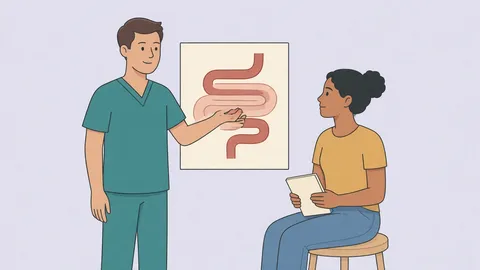
- The office exam is a look at the outside, a gloved finger in the rectum, and often a short scope called an anoscope. Most people do not need anesthesia for that look.
- Average-risk colorectal cancer screening starts at age 45. Bleeding is a symptom, so the visit comes whether or not a screening test is due.
- A video visit can sort urgency from your story. It cannot see a lump, feel inside the rectum, or tell a hemorrhoid from a fissure.
On this page
See a doctor for hemorrhoids when the symptom could be something else, when home care has had a fair try, or when the pain is bad enough that waiting is the wrong plan. Any rectal bleeding belongs on that list. So does a week of itching, aching, or a lump that is not settling. A short map of what hemorrhoids are helps before you go. This page is about timing, who to book, what the exam actually is, how to walk in prepared, and what a video visit cannot do.
The speed depends on the symptom. Heavy bleeding, bleeding with faintness, fever with pain, or a prolapsed hemorrhoid you cannot push back in should not wait on a routine slot. A single bright red streak, in someone who feels well, is still a reason to be seen. It can usually be a regular appointment rather than an emergency room.
The NIDDK page on hemorrhoid symptoms gives two triggers that cover a lot of ordinary cases: symptoms still there after 1 week of home care, and any bleeding from the rectum 1. The rest of this page is how to sort faster problems from those, and how to use the visit once you have it.
Symptoms that need care today
Get emergency care if you are bleeding and feel dizzy, lightheaded, or faint, or if you are losing a lot of blood 7. The NHS piles page sends people to emergency care for bleeding that does not stop, a large amount of blood, large clots, or severe pain 9.
Same-day care, the same day and not “next available in two weeks,” fits a few other pictures:
- Severe anal pain together with rectal bleeding, especially with abdominal discomfort, diarrhea, or fever 3
- Feeling very unwell, hot, cold, or shivery, or pus leaking 9
- A prolapsed internal hemorrhoid that will not go back in and is severely painful. The muscles around the anus can cut off its blood supply, which NIDDK calls strangulation 13
- A new, extremely painful lump at the anal edge. If it is a clot in an external hemorrhoid, removal helps most in the first 2 to 3 days 4. How to recognize that lump is on thrombosed hemorrhoid
Dark stool, weight loss, and a lasting change in bowel habits are on the American Cancer Society list of colorectal cancer symptoms, which also says hemorrhoids can cause some of the same problems and that you should still be checked 6. Color, amount, and what else to watch are spelled out on bleeding hemorrhoids.
Symptoms that need a visit soon
Book a regular appointment, and do not wait months, if:
- You see bright red blood, even once, and you feel otherwise well 17
- Home care for a week has not clearly helped 1
- Store creams or ointments have been on for a week. NIDDK says to follow up if they do not help by then, or if they cause a rash or dry skin 3
- The problem keeps coming back, or you notice a change around the anus that is new for you 9
- You are 45 or older and you are not up to date on colorectal cancer screening 5
- Pain with bowel movements feels sharp and tearing, which fits a fissure at least as well as a hemorrhoid. The NHS fissure page says to see a GP if symptoms are worse or no better after 7 days of self-care 10
A family physician review lists weight loss, abdominal pain, fever, and signs of anemia as red flags in people with rectal bleeding, along with a personal or family history of colorectal cancer or inflammatory bowel disease 4. The full review is a plain walk-through of the exam. If any of those red flags are true, say so when you book so the visit is not treated as a simple cream refill. The symptom patterns themselves are on hemorrhoid symptoms. Our guide to telling hemorrhoids from colon cancer explains what these red flags mean and how often bleeding turns out to be cancer.
If you are pregnant, say so when you call. Timing and which medicines are used can differ, and the pregnancy guide covers that season: hemorrhoids during pregnancy.
You can sort the story before you call with the hemorrhoid symptom checker. It will not replace the exam.
Which doctor to see for hemorrhoids
Start with the clinician who already knows you. NIDDK’s diagnosis page is written for that visit: your doctor takes the history and does the exam 2. The NHS route is the same. A GP checks that the symptoms are not from something else, and prescribes if home care is not enough 9.
The next clinician depends on the test or procedure.
A colonoscopy, when you need one, is done by a clinician trained in that test. Gastroenterologists and colon and rectal surgeons both do it. The test looks at the whole colon, which is how polyps and cancers are found when bleeding might not be from a hemorrhoid 26.
Banding and hemorrhoid surgery are the work of a colon and rectal surgeon, or of another clinician who offers those procedures. NIDDK says a doctor, most often a surgeon, removes hemorrhoids that do not respond to other care, and that rubber band ligation is a doctor’s procedure, never a home one 3. If you already know you want to ask about banding, the comparison of office procedures is on hemorrhoid procedures.
The first visit needs someone who will examine you. The referral can wait until that look is done.
What happens at the appointment
The history comes first. The NIDDK diagnosis page says the clinician will ask about your symptoms, what you eat, toilet habits, enema and laxative use, and your other medical conditions 2. The ASCRS patient page adds personal and family medical history 8. Expect questions about bleeding, pain, itching, a lump, and whether anything slips out and goes back.
Then the exam. For external hemorrhoids, looking at the area is often enough to make the diagnosis 27. Sandler and Peery say the outside should be checked at rest and while you bear down, plus a rectal exam 11. The clinician is looking for lumps, swelling, a prolapsed internal hemorrhoid, a clot, leakage of stool or mucus, irritated skin, skin tags, and a fissure, which is a small tear that can itch, hurt, or bleed 2.
A digital rectal exam is a lubricated, gloved finger in the rectum. It checks muscle tone, tenderness, blood, and lumps or masses. Internal hemorrhoids are easy to miss with the finger unless they are large or prolapsed, so the finger is not the whole exam 24.
Anoscopy is the short lighted tube that looks at the lining of the anus and lower rectum. It is done in the office or an outpatient room. Most people do not need anesthesia 2. Through the scope, internal hemorrhoids look like bulges 4. If the clinician needs to see higher, a rigid proctosigmoidoscope looks at the rectum and lower colon, again often without anesthesia 2.
Colonoscopy or a flexible sigmoidoscopy comes in when the bleeding might be coming from farther up, or when you are due for screening. Those are scheduled tests with their own prep. They are not the same as the office look with an anoscope 2. The Task Force screening recommendation starts routine screening at age 45 for adults at average risk, with a B recommendation for ages 45 to 49 and an A recommendation for ages 50 to 75 5.
If the exam is too painful, that is useful information. For a suspected fissure, the NHS says a GP who cannot complete the look, or who is unsure something more serious is going on, may refer you for an examination under anesthesia 10. A side-by-side of the two problems is on hemorrhoid or anal fissure.
How to prepare for a hemorrhoid appointment
An office visit for a look is not a colonoscopy. If the office schedules a colonoscopy, they will give you prep instructions. Ask which visit you are booking. The facts to have ready are the ones NIDDK says the clinician will ask about 2.
A list is enough.
What to ask at the visit
Leave with answers you can act on. These are the questions that match the decisions the guidelines actually force:
- Is this an internal hemorrhoid, an external one, a fissure, a skin tag, or still unclear?
- Do I need a colonoscopy? If not, what would change that plan?
- If we try fiber and home care, how many days until we switch to a procedure if I am not better?
- If this is a clot, am I still inside the first 2 to 3 days, when removal is most useful 4?
- If we band a bleeding internal hemorrhoid, what pain and bleeding should I expect in the first two weeks? A second bleed 10 to 14 days later is a known point, and blood thinners raise the risk of a serious bleed 12. The recovery detail is on rubber band ligation: what to expect.
- Which creams should I stop at one week, and which habits should I keep 3?
Write the answers down before you leave. The menu of treatments, if you want it before you go, is on hemorrhoid treatment.
What a video visit can and cannot do
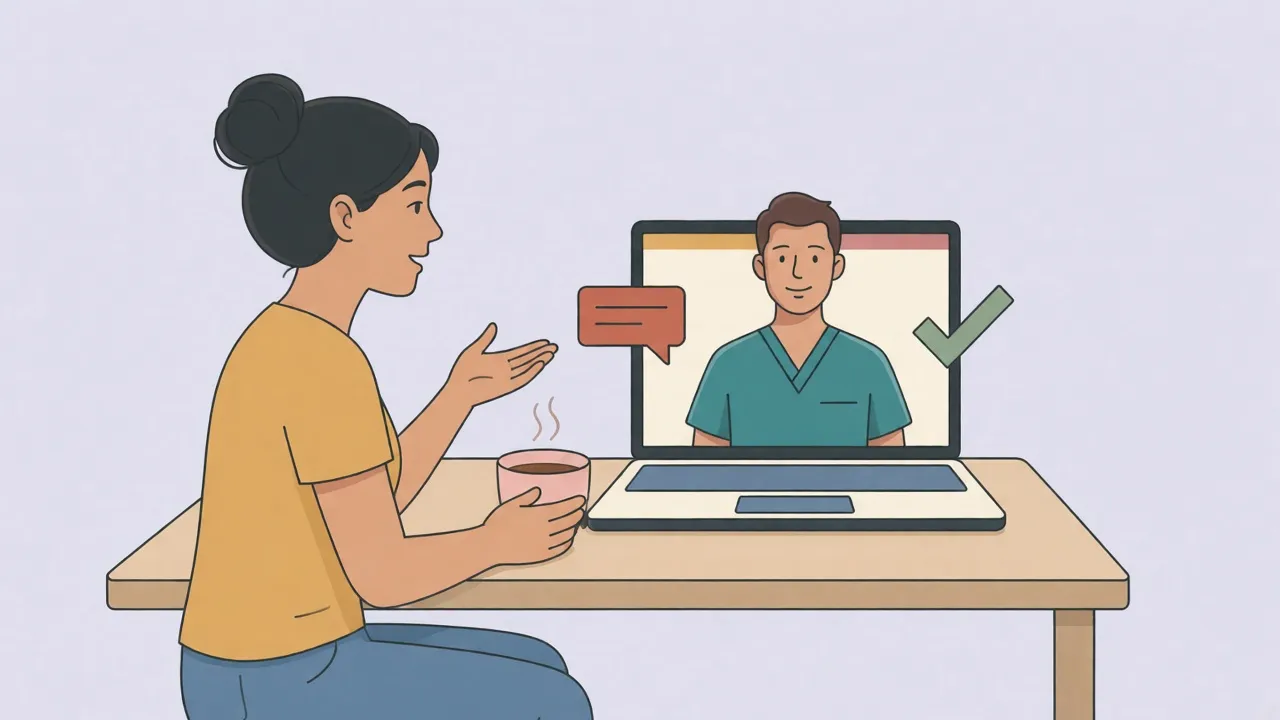
A video visit is a good way to decide the speed. You can report color, pain, fever, and how long this has gone on. A clinician can tell you to go to emergency care, to come in today, or to book a routine look and start fiber.

It cannot see the skin, feel a mass, or pass an anoscope. Those are the steps NIDDK uses to tell external hemorrhoids, internal hemorrhoids, a clot, a tag, and a fissure apart 2. Symptom lists overlap enough that the story alone mislabels people 11. Use the video visit to get on the right clock. Use the in-person visit to get the diagnosis.
If you have heavy bleeding, feel faint, or have severe pain with fever, skip the video visit and get emergency care 79.
Frequently asked questions
Can a video visit diagnose hemorrhoids?
It can help you decide whether to be seen today or later this week. Diagnosing an external hemorrhoid means looking at the skin. Diagnosing an internal one usually means a gloved finger exam and a short scope. Those steps need a room and a clinician. Use in-person care if you have heavy bleeding, fever, or severe pain, and do not wait on a video slot.
What kind of doctor treats hemorrhoids?
Most people start with the clinician they already see. That person can examine you and decide if you need a procedure or a look inside the colon. Gastroenterologists and colon and rectal surgeons both perform colonoscopy. Banding and hemorrhoid surgery are usually done by a colon and rectal surgeon, or by another clinician who offers those procedures.
Will the hemorrhoid exam hurt?
A look at the outside and a lubricated finger exam are uncomfortable more often than they are sharply painful. Anoscopy, the short scope, is usually done in the office without anesthesia. If the exam itself causes a lot of pain or muscle spasm, the clinician may stop and arrange a look under anesthesia, which is the path the NHS describes for a suspected fissure.
Do I need a colonoscopy just because I saw blood?
Someone has to decide, because bright red blood can be a hemorrhoid, a tear, a polyp, or a cancer. Screening for people without symptoms starts at 45. Under 45, a family history of colorectal cancer, weight loss, anemia, or a change in bowel habits makes a full colon exam more likely. Ask at the visit why a scope is or is not being ordered.
How long should home care go on before I call?
NIDDK uses one week. If you have already used store creams or a fiber plan for a week and you are not clearly better, call. Any bleeding is a reason to call earlier than that week. A new, very painful lump is a reason to call in the first two or three days, when removal of a clot is most useful.
What should I bring to the appointment?
A short note of when the symptoms started, what the blood looked like, and your usual bowel habits. Bring the names of creams, laxatives, fiber, and blood thinners you use, and the date of your last colonoscopy if you have had one. Mention pregnancy and any family history of colon cancer or inflammatory bowel disease.
Sources
- 1. Symptoms & Causes of Hemorrhoids . National Institute of Diabetes and Digestive and Kidney Diseases (NIDDK) . Government
- 2. Diagnosis of Hemorrhoids . National Institute of Diabetes and Digestive and Kidney Diseases (NIDDK) . Government
- 3. Treatment of Hemorrhoids . National Institute of Diabetes and Digestive and Kidney Diseases (NIDDK) . Government
- 4. Mott T, Latimer K, Edwards C Hemorrhoids: Diagnosis and Treatment Options . Am Fam Physician , 2018 ; 97(3):172-179 . Review
- 5. US Preventive Services Task Force Screening for Colorectal Cancer: US Preventive Services Task Force Recommendation Statement . JAMA , 2021 ; 325(19):1965-1977 . doi:10.1001/jama.2021.6238 Guideline
- 6. Colorectal Cancer Signs and Symptoms . American Cancer Society . Reference
- 7. Hemorrhoids: MedlinePlus Medical Encyclopedia . MedlinePlus, US National Library of Medicine . Government
- 8. Hemorrhoids: Expanded Information . American Society of Colon and Rectal Surgeons . Guideline
- 9. Piles (haemorrhoids) . NHS , 2026 . Government
- 10. Anal fissure . NHS . Government
- 11. Sandler RS, Peery AF Rethinking What We Know About Hemorrhoids . Clin Gastroenterol Hepatol , 2019 ; 17(1):8-15 . doi:10.1016/j.cgh.2018.03.020 Review
- 12. Albuquerque A Rubber band ligation of hemorrhoids: A guide for complications . World J Gastrointest Surg , 2016 ; 8(9):614-620 . doi:10.4240/wjgs.v8.i9.614 Review
- 13. Definition & Facts of Hemorrhoids . National Institute of Diabetes and Digestive and Kidney Diseases (NIDDK) . Government