Quick answer
You can prevent many hemorrhoid flares by keeping stools soft and toilet visits short. Aim for about 25 to 35 grams of fiber a day, drink enough fluid for that fiber to work, go when the urge hits, and skip long sits and regular heavy lifting. Walking helps the constipation that often shows up with hemorrhoids.
Product links on this page go to Amazon. As an Amazon Associate I earn from qualifying purchases. No brand pays for a place on our lists. How we choose products
Key takeaways
- In a combined analysis of seven trials, fiber lowered the chance of hemorrhoid bleeding by about half, and lowered the chance that symptoms would drag on by 47 percent.
- The National Institute of Diabetes and Digestive and Kidney Diseases lists straining, long toilet sits, chronic constipation or diarrhea, a low-fiber diet, pregnancy, and frequent heavy lifting as causes.
- A 2025 colonoscopy survey of 125 adults found phone use on the toilet went with more visits lasting over five minutes, and with a 46 percent higher chance of hemorrhoids.
- Body weight is unsettled: one screening study found a higher chance as body mass index rose, and a larger U.S. colonoscopy study did not find a link with overweight or obesity.
- Rectal bleeding that is new, heavy, or dark needs a clinician, and adults 45 and older should be up to date on colorectal cancer screening.
On this page
Most hemorrhoid flares get easier when stools stay soft and you stop pushing. The NIDDK page on hemorrhoid treatment says you can usually treat them at home with more fiber, enough fluid that is not alcohol, no straining, shorter toilet sits, and less regular heavy lifting 1. Those are the same steps the NIDDK lists for prevention 1.
This page is the overview of how to prevent hemorrhoids. It covers fiber and fluids, toilet habits, movement and body weight, constipation and diarrhea, and a day you can repeat. Gram counts and food lists are in the hemorrhoid diet guide. How these habits start the problem is covered in what causes hemorrhoids.
Symptoms from an external hemorrhoid often fade within a few days 2. Prevention is how you lower the chance of the next flare. In an Austrian screening study, 380 of 976 adults had hemorrhoids on exam, and 210 of those 380 reported no symptoms at all 3. A lot of people have the cushions and never feel them. The goal here is fewer painful, itchy, or bleeding episodes.
Why hemorrhoids come back
The NIDDK’s page on symptoms and causes lists straining during bowel movements, sitting on the toilet for a long time, chronic constipation or diarrhea, a low-fiber diet, weakening of the supporting tissues with age, pregnancy, and often lifting heavy objects 2. The NHS piles page adds pushing too hard, heavy lifting, pregnancy, getting older, and being overweight 18.
The research on those causes is less tidy than the lists. A review from gastroenterologists at the University of North Carolina put it plainly: a low-fiber diet and constipation have long been blamed, and that link has not been proven 4. Symptoms people blame on hemorrhoids, including bleeding, pain, itching, and prolapse, were reported about as often by patients who did not have hemorrhoids on exam 4. If bleeding keeps happening, it still needs a look, even when you are doing every prevention step.
In a U.S. colonoscopy study of 2,813 adults, 1,074 had hemorrhoids recorded. People with constipation had about 43 percent higher odds (odds ratio 1.43) 12. The group eating the most grain fiber had about 22 percent lower odds than the group eating the least (odds ratio 0.78) 12. An older look at national surveys found that hemorrhoids and constipation do not rise and fall in the same age groups, which is one reason doctors stopped treating constipation as the whole explanation 13.
A 2024 genetic study did not find that a genetic tendency toward constipation or diarrhea caused hemorrhoids. It did find links with more frequent stools (odds ratio 1.28) and with a higher waist-to-hip ratio after accounting for body mass index (odds ratio 1.11). A reverse analysis then found a constipation link (odds ratio 1.21), so the constipation question is still open 14. What you can use today is the part the trials actually measured: softer stools and less straining, which is what the fiber research tested.
Fiber and fluids, the step with the best evidence
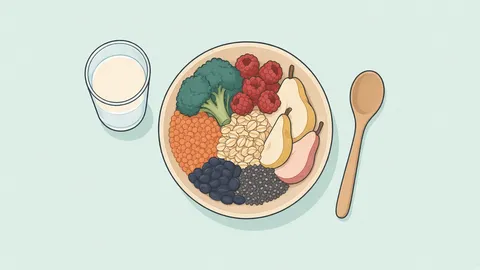
Fiber is the home step with trial data behind it. A 2006 meta-analysis of seven fiber trials is the main evidence, and the details are below 7. The American Academy of Family Physicians describes a high-fiber diet of 25 to 35 grams a day, plus a fiber supplement, more water, warm soaks, and stool softeners, as the first treatment 6. The American Society of Colon and Rectal Surgeons patient page gives a similar range, 20 to 35 grams a day, and says most people can use a fiber supplement once or twice a day 11.
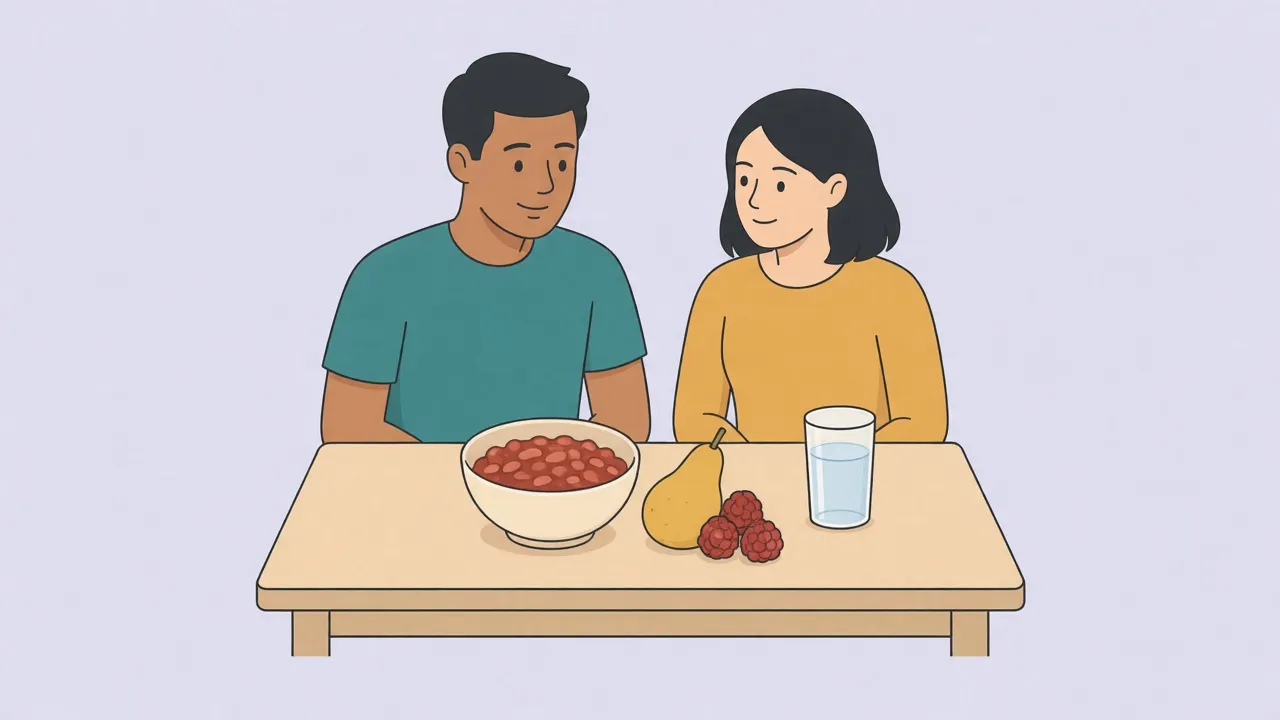
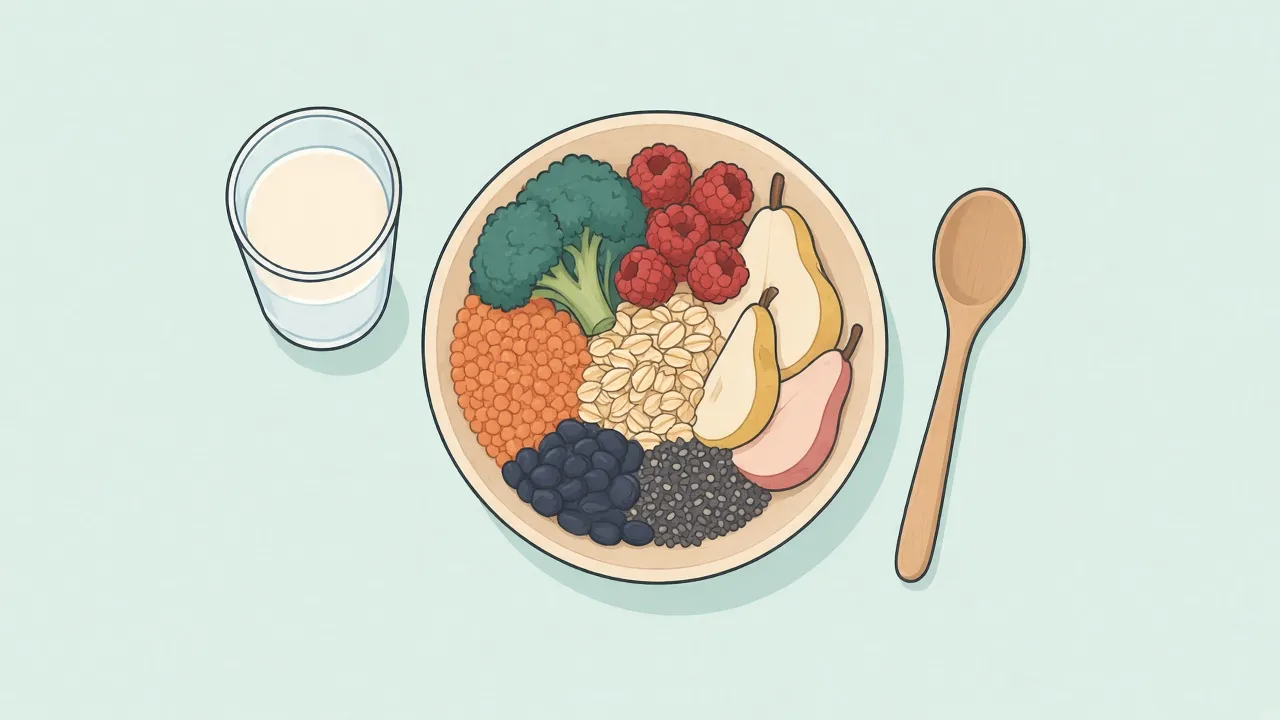
The NIDDK hemorrhoid diet page quotes the Dietary Guidelines figure of 14 grams of fiber per 1,000 calories, or 28 grams on a 2,000 calorie day 5. Its constipation diet page says adults need 22 to 34 grams a day depending on age and sex, and that you should add fiber a little at a time so your gut can adjust 8. Only about 5 percent of Americans meet fiber recommendations, so most people starting this plan are closing a real gap, not fine-tuning a diet that was already on target 9.
Use the fiber calculator to see what a normal day of your eating adds up to. If food alone falls short, psyllium is the fiber used in most of the hemorrhoid and constipation trials. Our roundup of fiber supplements for hemorrhoids compares powders, capsules, and gummies.
Water is the other half of the plan. The NIDDK says water, fruit juice, and clear soups help fiber do its job, and that the right amount depends on your health, activity, and climate 5. In a two-month trial, 117 adults with constipation all ate about 25 grams of fiber a day. The group asked to drink 2 liters of mineral water (they averaged 2.1 liters) had more bowel movements and used fewer laxatives than the group drinking freely, who averaged 1.1 liters 10. The colon and rectal surgeons’ patient page suggests 8 to 10 glasses of fluid a day and says coffee, tea, and alcohol should not be counted in that total, because they tend to dry you out 11. The NHS also suggests cutting back on alcohol and caffeine to avoid constipation 18.
If your hemorrhoids flare when you are constipated, the NIDDK says to go easy on foods with little or no fiber: cheese, chips, fast food, ice cream, meat, and many frozen snacks and processed dinners 5. Meat can stay on the plate. Beans, fruit, vegetables, or whole grains still have to show up so the day reaches the gram target. The diet guide walks through meals. Spicy food is a common worry too. What the chili pepper trials found is covered in a separate post.
Toilet time and how you sit
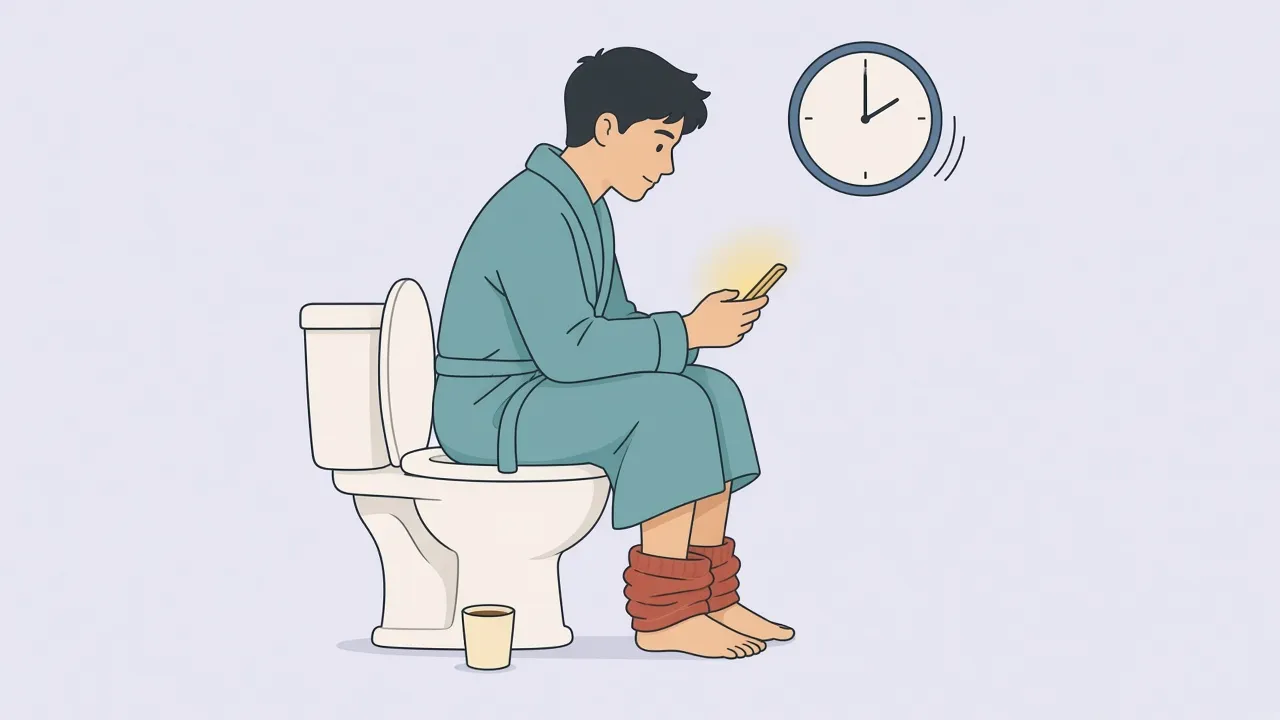
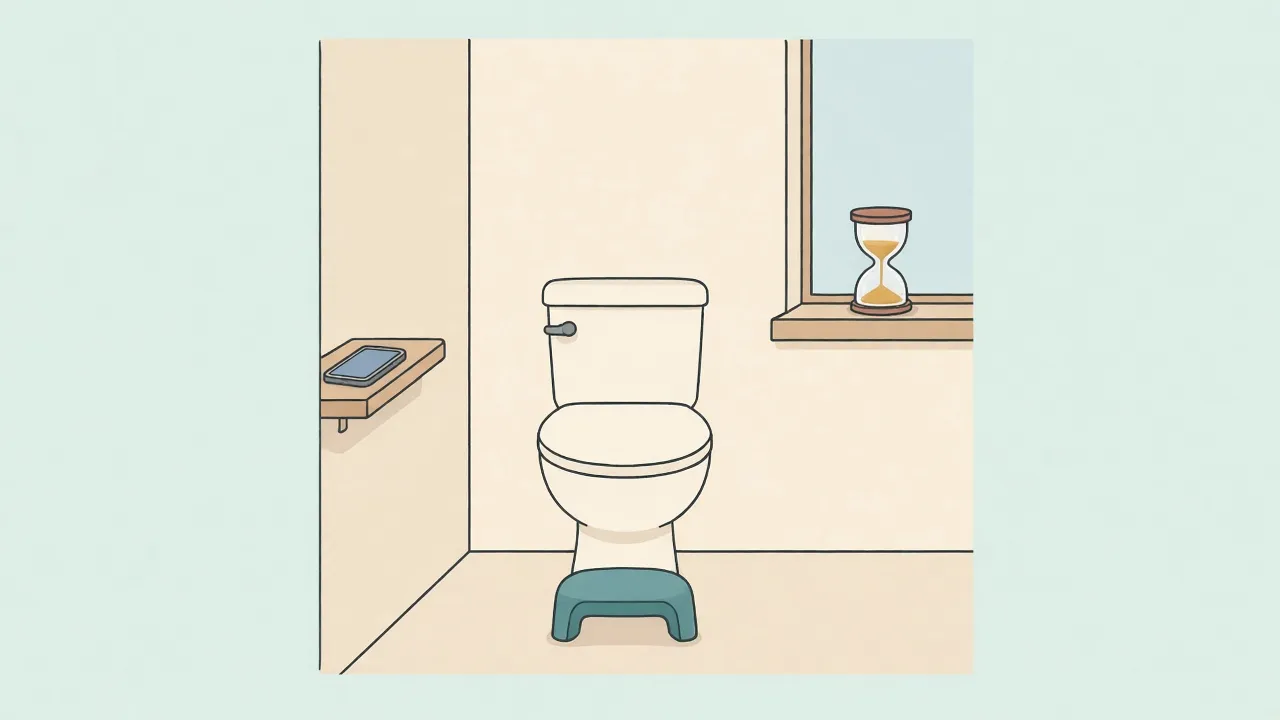
Straining and long toilet sits are on the NIDDK cause list, and both are on the prevention list too 12. A 2025 colonoscopy survey of smartphone use on the toilet at Beth Israel Deaconess looked at 125 adults. Forty-three percent had hemorrhoids on exam. Sixty-six percent used a phone on the toilet. Among phone users, 37.3 percent sat more than five minutes, compared with 7.1 percent of people who left the phone outside. After accounting for age, sex, body mass index, exercise, straining, and fiber, phone use was tied to a 46 percent higher chance of hemorrhoids 16. The phone-on-the-toilet article goes through what that study can and cannot prove. The short version for prevention: if nothing is happening, stand up. Five minutes was the cutoff the researchers used.
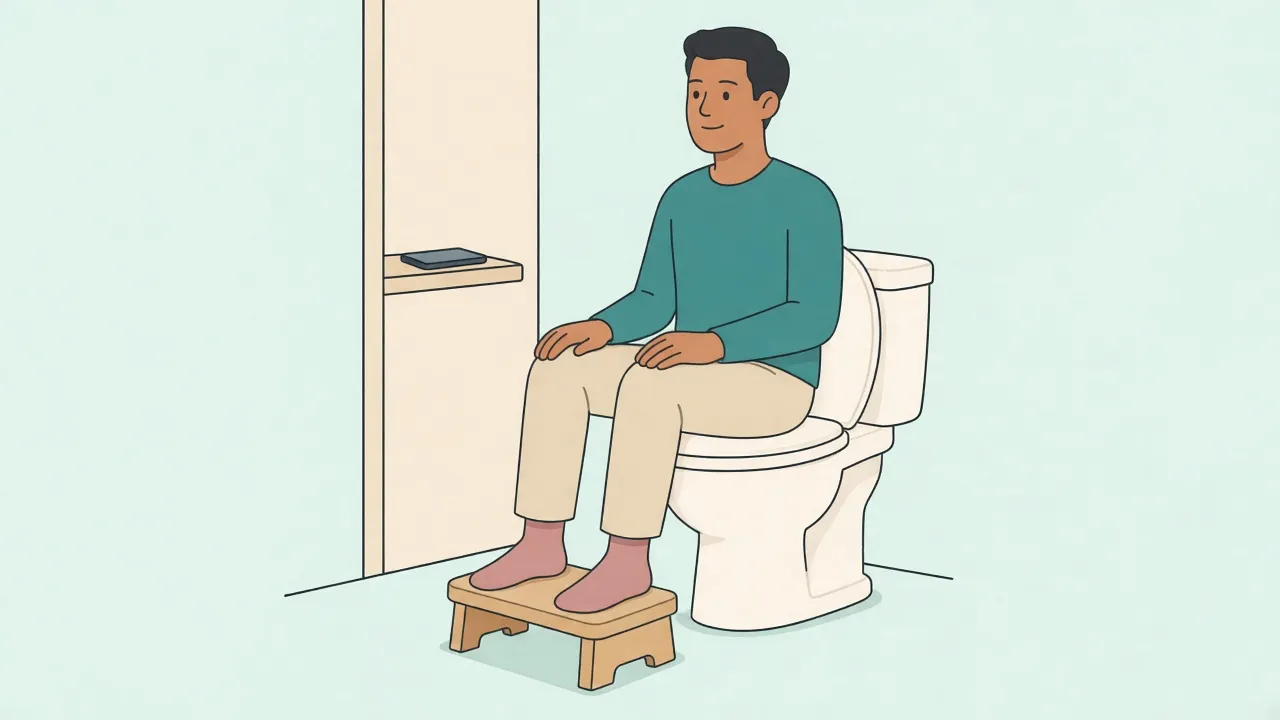
The way you sit changes how hard you have to push. The NIDDK constipation treatment page suggests a footstool so you can relax your muscles, and a regular time of day, often 15 to 45 minutes after breakfast, because eating starts the colon moving 15. Go when the urge shows up. The NHS says the same: do not ignore the urge, do not push hard, and do not stay longer than you need 18. Posture studies of squatting, a footstool, and a forward lean are written up in toilet habits that help hemorrhoids. If you want a stool sized for a standard toilet, the toilet stool comparison covers height, travel, and shared bathrooms.
Cleaning matters once the skin is sore. Pat dry instead of rubbing, which is the NHS advice 18. Wipes, a rinse bottle, and bidets are covered on the toilet habits page so this overview can stay with the habits that prevent the next flare.
Movement, lifting, and body weight
The NIDDK lists often lifting heavy objects as a cause, and avoiding regular heavy lifting as a prevention step 12. During a flare, leave the heavy sets alone. Walk, and save a new max lift for after the pain and bleeding have settled. Which workouts are reasonable in the meantime, including what to do with your breath during a lift, is the subject of exercise with hemorrhoids.

Activity and hemorrhoids are not a simple story. In the Peery colonoscopy study, physical activity was not clearly linked to hemorrhoids (odds ratio 0.83, and the range crossed “no difference”). Sedentary behavior was linked to about 20 percent lower odds 12. That finding argues against blaming a desk job by itself. A French survey of 1,033 patients and 1,028 comparison patients found something more specific: harder-than-usual physical activity in the prior two weeks was more common among people in a hemorrhoid flare (odds ratio 2.79), along with constipation, a spicy diet, and alcohol 17. The authors treated those links as real at a looser statistical cutoff than most trials use (P under 0.1). A sudden hard week is a different exposure from a steady walking habit.
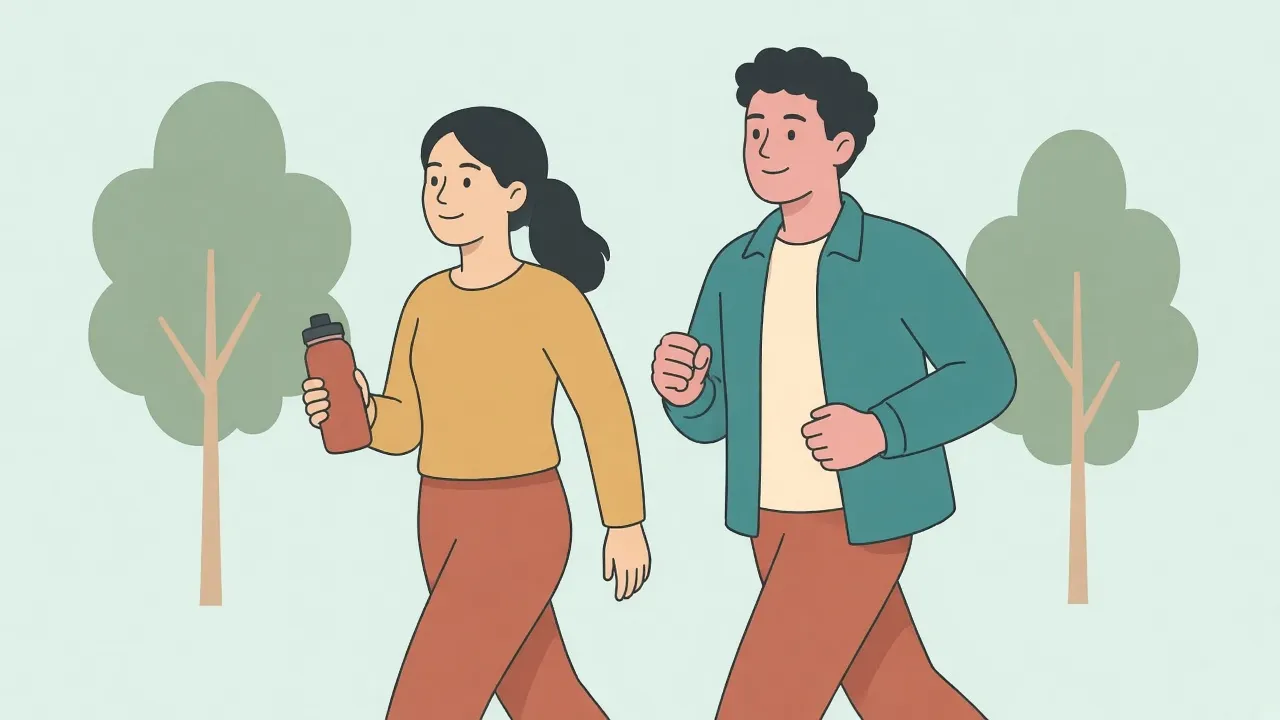
For constipation itself, the NIDDK says regular physical activity may ease symptoms, alongside fiber and fluid 15. The colon and rectal surgeons’ patient page lists exercise with fiber, a supplement, and fluids as the base of care, whether or not surgery is planned. The aim is a soft, bulky stool that is easy to wipe, and to avoid both very hard stools and diarrhea 11.
Weight sits in the same “the studies disagree” pile. In the Austrian screening group, each one-point rise in body mass index raised the chance of hemorrhoids by 3.5 percent 3. In the U.S. colonoscopy group, neither overweight nor obesity was linked (odds ratios 0.89 and 0.86) 12. The genetic study’s waist-to-hip finding is a third data point, and it is about fat distribution rather than the scale alone 14. The NHS still lists being overweight as something that makes piles more likely 18. If you are already working on weight, the fiber target and the walks serve that goal and the bowel goal together. Do not put off the toilet habits while you wait for a lower number on the scale.
Constipation and diarrhea
Constipation has the clearer tie to hemorrhoids in everyday practice. Peery’s colonoscopy study found higher odds with constipation 12. In a cohort of 280 pregnant women, constipation was a strong predictor of hemorrhoids or an anal fissure in late pregnancy and after birth (odds ratio 18.98) 22. Pregnancy changes more than diet, so the plan is different then. Use the pregnancy hemorrhoid guide for what is considered safe.
For everyone else, treat constipation in this order.
- Raise food fiber toward the 22 to 34 gram range, a little at a time 8. If you want a single clinical target, family physicians use 25 to 35 grams 6.
- Drink more fluid as the fiber rises. The trial above used about 2 liters of mineral water a day with 25 grams of fiber 10. Ask your own clinician if you are on a fluid limit.
- Keep a daily walk or similar activity 15.
- Try for a bowel movement 15 to 45 minutes after breakfast, feet on a footstool, and leave if nothing happens 1518.
If that is not enough, a clinician may suggest a laxative for a short time. The NIDDK lists fiber supplements, osmotic laxatives, stool softeners, lubricants such as mineral oil, and stimulant laxatives. Stimulants are for when constipation is severe or the other options have not worked. People who have needed a laxative for a long time should ask how to taper it, because the colon can start moving stool again once the stimulant is reduced 15.
Psyllium has done better than a common stool softener in a head-to-head trial. Adults with chronic constipation took either psyllium 5.1 grams twice a day or docusate sodium 100 mg twice a day for two weeks. Psyllium raised stool water content more (a 2.33 percent increase versus 0.01 percent). By the second week, the psyllium group averaged 3.5 bowel movements a week and the docusate group averaged 2.9 21. How to choose among fiber, a softener, and a laxative is laid out in stool softener, fiber, or laxative. Short-term softener products are on the stool softener page.
Diarrhea is on the cause list too 26. The genetic study did not find that a tendency toward diarrhea caused hemorrhoids 14. The practical problem is still real: loose stool means more wiping, and rubbing makes symptoms worse 2. The surgeons’ page says the stool you want is soft and bulky, not hard and not watery 11. If diarrhea lasts, or comes with fever, belly pain, or bleeding, that is a reason to be seen, not a reason to keep adjusting fiber on your own 1.
While stools are loose, pat the skin dry instead of rubbing 18. Skip codeine painkillers, which the NHS says can cause constipation and set up the next round of straining 18. The NIDDK lists acetaminophen, ibuprofen, naproxen, and aspirin for hemorrhoid pain 1. The NHS says not to take ibuprofen if the hemorrhoids are bleeding 18. Follow the label, and ask a pharmacist if you already take a blood thinner or have kidney disease.
A simple day that covers the basics
You do not need a perfect diet. You need the same few moves often enough that stools stay soft and toilet visits stay short.
| Time | What to do |
|---|---|
| Breakfast | Include a high-fiber food, such as bran cereal, beans, fruit with the skin, or oats. Drink a full glass of water. If you use psyllium, take it with that glass and follow the label. |
| 15 to 45 minutes later | Use the bathroom if you feel the urge. Feet on a footstool. No phone. Stand up if nothing happens. |
| Midday | Add another fiber food at lunch. Take a walk. The NIDDK ties regular activity to easier constipation, not to a specific sport 15. |
| Dinner | Build the plate so the day’s fiber is moving toward 25 grams or more. Beans, peas, berries, and cooked vegetables are the foods the NIDDK chart uses 5. |
| Evening, if you are sore | A warm sitz bath, several times a day, is on the NIDDK home list for pain 1. Keep the same stool plan so the next morning is not a hard bowel movement. |
A psyllium powder matches the fiber in the trials. People who use the orange sugar-free powder often say a full glass of water makes it easier to drink, and that it thickens if it sits. A 7 inch toilet stool is the everyday version of the footstool the constipation page describes. People who use one often say bowel movements take less time. Height has to match the toilet, or it will not put your knees up. Both are below, next to the habits they support.
Most people starting fiber for hemorrhoids
Standard-height toilets and first-time users
Give the plan a few weeks before you decide it failed. The bleeding benefit in the fiber trials was still there at about 6 weeks and at 3 months 7. If gas is the reason you quit, drop back one step in the fiber dose and hold there until it eases 820.
When home habits are not enough
Home care is the right start for typical flares. It is the wrong plan when bleeding might be something else, or when a week of care has changed nothing.
The NIDDK says to get care right away for severe anal pain and rectal bleeding, especially with belly pain, diarrhea, or fever 1. Check back if store creams or ointments have not helped after a week, or if they cause a rash or dry skin 1. The U.S. Preventive Services Task Force recommendation on colorectal cancer screening says to screen adults 45 to 49 (a B recommendation) and adults 50 to 75 (an A recommendation) 19. Bright red blood on the paper is common with hemorrhoids, and it is also a reason to be current on screening.

When to see a doctor for hemorrhoids: red flags, which clinician to book, what the exam includes, how to prepare, and telehealth limits.
If you are 45 or older and you have never been screened, ask about screening at the visit you book for bleeding. The Task Force found a moderate benefit for starting at 45 and a substantial benefit from 50 to 75 19.
Every guide in prevention and daily habits
Frequently asked questions
How much fiber should I eat to prevent hemorrhoids?
Family physicians often suggest 25 to 35 grams of fiber a day as the first home treatment. The NIDDK also cites 14 grams per 1,000 calories, which is 28 grams on a 2,000 calorie day, and a range of 22 to 34 grams depending on age and sex. Add it a little at a time and drink more fluid as the fiber goes up. A single high-fiber meal will not undo weeks of hard stools.
How long does fiber take to help hemorrhoids?
The fiber trials that checked people more than once usually looked again at about 6 weeks and at 3 months, and the benefit for bleeding and overall symptoms held at both points. A 2022 review of fiber for constipation found stool frequency improved with supplemental doses over 10 grams a day, and with at least 4 weeks of use. Gas is common in the first stretch. If bloating is strong, hold the dose steady for a few days before you add more.
Will losing weight prevent hemorrhoids?
An Austrian screening study found the chance of hemorrhoids rose by about 3.5 percent for each one-point rise in body mass index. A larger U.S. colonoscopy study did not find that overweight or obesity tracked with hemorrhoids. A genetic study did find a link with a higher waist measurement compared with hip measurement. Weight loss can still be worth doing for general health. A lower number on the scale has not been shown to make hemorrhoids go away.
Can sitting at a desk all day cause hemorrhoids?
Long sits on the toilet are on the cause list. Desk time is a different question. In one large colonoscopy study, sedentary time was linked to slightly lower odds of hemorrhoids, and physical activity was not clearly linked either way. Regular walking can still help constipation. The sit to shorten is the one on the toilet, especially if a phone is in your hand.
What should I do during a flare if I want to stop the next one?
Keep the stool-softening habits, and use warm soaks if pain is the main problem. Many external hemorrhoid symptoms ease within a few days. Check back with a doctor if store products have not helped after a week. Pause regular heavy lifting and long toilet sits while you are sore. The NHS says not to take ibuprofen if the hemorrhoids are bleeding, and not to use codeine painkillers, because codeine can cause constipation.
Sources
- 1. Treatment of Hemorrhoids . National Institute of Diabetes and Digestive and Kidney Diseases (NIDDK) . Government
- 2. Symptoms & Causes of Hemorrhoids . National Institute of Diabetes and Digestive and Kidney Diseases (NIDDK) . Government
- 3. Riss S, Weiser FA, Schwameis K, et al. The prevalence of hemorrhoids in adults . Int J Colorectal Dis , 2012 ; 27(2):215-220 . doi:10.1007/s00384-011-1316-3 Study
- 4. Sandler RS, Peery AF Rethinking What We Know About Hemorrhoids . Clin Gastroenterol Hepatol , 2019 ; 17(1):8-15 . doi:10.1016/j.cgh.2018.03.020 Review
- 5. Eating, Diet, & Nutrition for Hemorrhoids . National Institute of Diabetes and Digestive and Kidney Diseases (NIDDK) . Government
- 6. Mott T, Latimer K, Edwards C Hemorrhoids: Diagnosis and Treatment Options . Am Fam Physician , 2018 ; 97(3):172-179 . Review
- 7. Alonso-Coello P, Mills E, Heels-Ansdell D, et al. Fiber for the treatment of hemorrhoids complications: a systematic review and meta-analysis . Am J Gastroenterol , 2006 ; 101(1):181-188 . doi:10.1111/j.1572-0241.2005.00359.x Review
- 8. Eating, Diet, & Nutrition for Constipation . National Institute of Diabetes and Digestive and Kidney Diseases (NIDDK) . Government
- 9. Quagliani D, Felt-Gunderson P Closing America's Fiber Intake Gap: Communication Strategies From a Food and Fiber Summit . Am J Lifestyle Med , 2017 ; 11(1):80-85 . doi:10.1177/1559827615588079 Review
- 10. Anti M, Pignataro G, Armuzzi A, et al. Water supplementation enhances the effect of high-fiber diet on stool frequency and laxative consumption in adult patients with functional constipation . Hepatogastroenterology , 1998 ; 45(21):727-732 . Clinical trial
- 11. Hemorrhoids: Expanded Information . American Society of Colon and Rectal Surgeons . Guideline
- 12. Peery AF, Sandler RS, Galanko JA, et al. Risk Factors for Hemorrhoids on Screening Colonoscopy . PLoS One , 2015 ; 10(9):e0139100 . doi:10.1371/journal.pone.0139100 Study
- 13. Johanson JF, Sonnenberg A The prevalence of hemorrhoids and chronic constipation. An epidemiologic study . Gastroenterology , 1990 ; 98(2):380-386 . doi:10.1016/0016-5085(90)90828-o Study
- 14. Yu M, Shang Y, Han L, et al. Bowel Habits, Obesity, Intestinal Microbiota and Their Influence on Hemorrhoidal Disease: a Mendelian Randomization Study . Clin Exp Gastroenterol , 2024 ; 17:157-164 . doi:10.2147/CEG.S450807 Study
- 15. Treatment for Constipation . National Institute of Diabetes and Digestive and Kidney Diseases (NIDDK) , 2018 . Government
- 16. Ramprasad C, Wu C, Chang J, et al. Smartphone use on the toilet and the risk of hemorrhoids . PLoS One , 2025 ; 20(9):e0329983 . doi:10.1371/journal.pone.0329983 Study
- 17. Pigot F, Siproudhis L, Allaert FA. Risk factors associated with hemorrhoidal symptoms in specialized consultation . Gastroenterol Clin Biol , 2005 ; 29(12):1270-4 . doi:10.1016/s0399-8320(05)82220-1 Study
- 18. Piles (haemorrhoids) . NHS , 2026 . Government
- 19. US Preventive Services Task Force Screening for Colorectal Cancer: US Preventive Services Task Force Recommendation Statement . JAMA , 2021 ; 325(19):1965-1977 . doi:10.1001/jama.2021.6238 Guideline
- 20. van der Schoot A, Drysdale C, Whelan K, Dimidi E The Effect of Fiber Supplementation on Chronic Constipation in Adults: An Updated Systematic Review and Meta-Analysis of Randomized Controlled Trials . Am J Clin Nutr , 2022 ; 116(4):953-969 . doi:10.1093/ajcn/nqac184 Review
- 21. McRorie JW, Daggy BP, Morel JG, et al. Psyllium is superior to docusate sodium for treatment of chronic constipation . Aliment Pharmacol Ther , 1998 ; 12(5):491-497 . doi:10.1046/j.1365-2036.1998.00336.x Clinical trial
- 22. Poskus T, Buzinskienė D, Drasutiene G, et al. Haemorrhoids and anal fissures during pregnancy and after childbirth: a prospective cohort study . BJOG , 2014 ; 121(13):1666-1671 . doi:10.1111/1471-0528.12838 Study