Quick answer
Hemorrhoids form when the anal cushions are pushed downward. Straining, constipation, long toilet sits, pregnancy, low fiber, heavy lifting, and weight are the usual explanations. A large colonoscopy study linked constipation and low grain fiber to hemorrhoids. A genetic study did not find that constipation or diarrhea causes them. Softer stools and shorter sits are still the practical steps.
Product links on this page go to Amazon. As an Amazon Associate I earn from qualifying purchases. No brand pays for a place on our lists. How we choose products
Key takeaways
- Hemorrhoids are anal cushions that have enlarged or slipped down. An old anatomical study and later reviews describe that displacement, along with wear in the supporting tissue.
- In a colonoscopy study of 2,813 adults, constipation raised the odds of hemorrhoids (odds ratio 1.43), and the highest grain-fiber intake lowered them (odds ratio 0.78).
- A 1990 look at national surveys found that hemorrhoids and constipation do not rise in the same age groups, which argues against a simple one-cause story. A 2024 genetic study also found no causal effect of constipation or diarrhea.
- In a pregnancy cohort of 280 women, 40.7% developed hemorrhoids, mostly in the third trimester. A separate colonoscopy study found no link between having ever been pregnant and hemorrhoids later.
- Each one-point rise in body mass index raised hemorrhoid risk by 3.5% in one screening study. Another large colonoscopy study found no link with overweight or obesity.
On this page
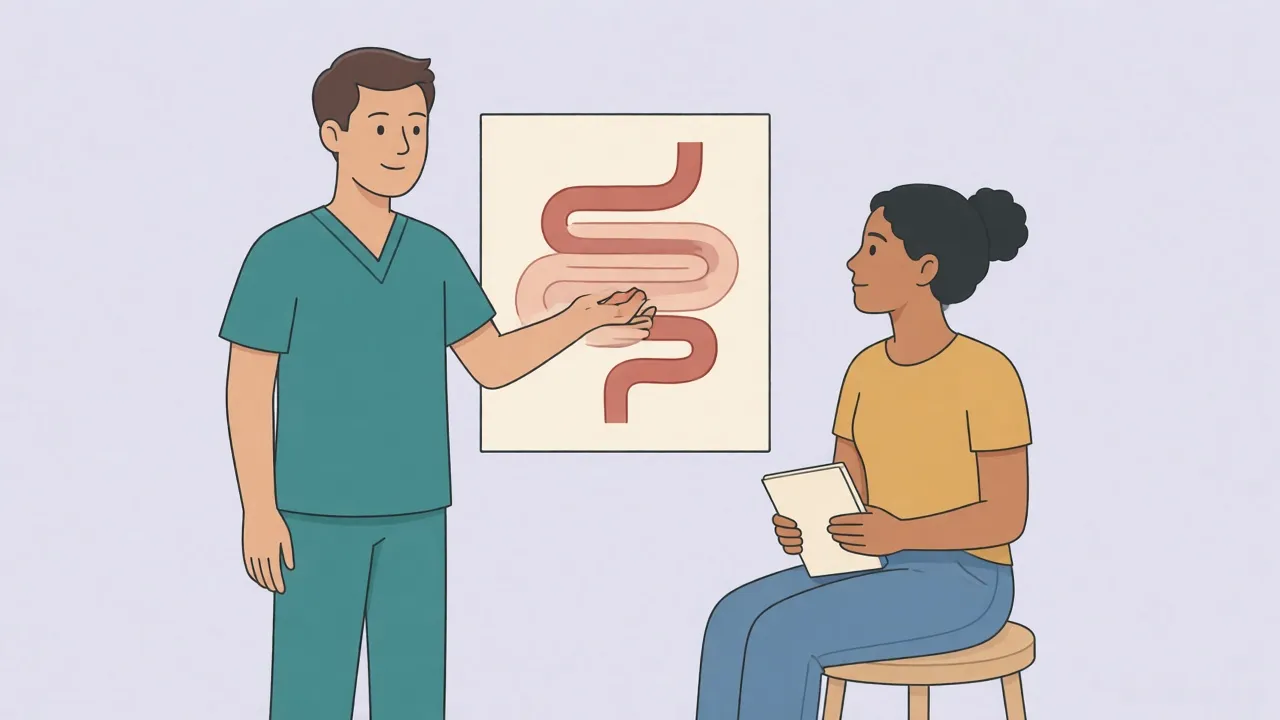
Hemorrhoids start as normal tissue. The anal canal has cushions of blood vessels and supporting tissue. When those cushions enlarge or slip downward, they become what people call hemorrhoids. A plain overview of what hemorrhoids are is the companion to this page. This one stays on the pressure that pushes the cushions out of place, and on how strong the evidence is for each cause.
The NIDDK list of hemorrhoid causes names straining during bowel movements, sitting on the toilet for a long time, chronic constipation or diarrhea, a low-fiber diet, weakening of the supporting tissues with aging, pregnancy, and often lifting heavy objects 1. Those items show up in clinic after clinic. They are not equally proven.
Some of the best studies were set up to test that list, and they split. Constipation shows up in one large colonoscopy study and looks unrelated in a genetic study. Body weight looks harmful in one data set and neutral in another. Pregnancy is common in the third trimester and, in a different study, leaves no trace years later. The sections below keep those disagreements in the open.
What pressure does to the anal cushions
In 1975, Thomson described specialized cushions of tissue lining the anal canal and argued that piles are those cushions after they have slipped down 2. A 2012 review uses almost the same definition: hemorrhoids are the symptomatic enlargement and downward displacement of the normal anal cushions. The review also describes wear in the supporting connective tissue, and changes in the blood vessels inside the cushion 3.
The cause of that slip is still partly guesswork. A 2019 review by Sandler and Peery calls the cause speculative. Low fiber and constipation have been the leading explanation since the 1970s, and that review says they have not been proven 4. In the United States they are the third most common outpatient gastrointestinal diagnosis, with nearly 4 million office and emergency visits a year 4.
The practical picture is pressure from the abdomen, repeated often enough to stretch the supports. Straining is the pressure you can feel.
Straining, and the position you sit in
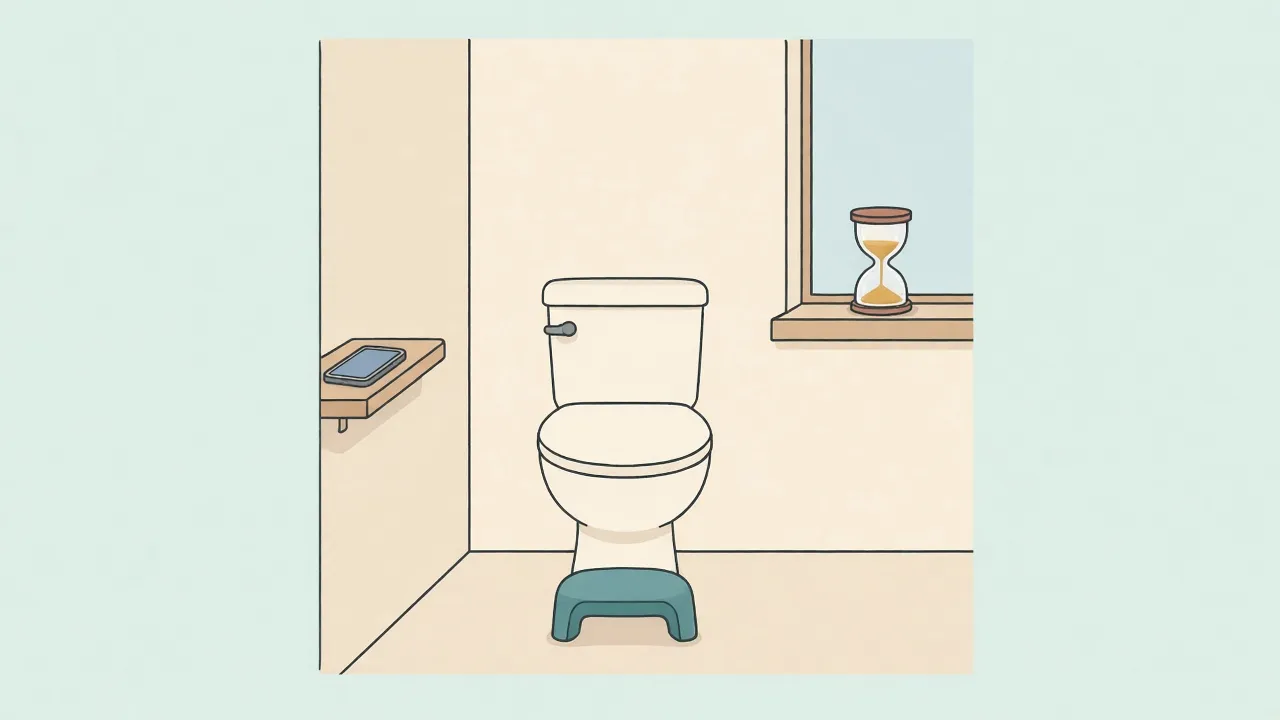
Straining is the cause NIDDK puts first 1. How you sit changes how hard you have to push. In a small study of 28 healthy volunteers, both the time needed to feel empty and the effort of straining dropped sharply in a squat compared with sitting on a standard toilet or a lower one 8. A later study of a footstool in healthy adults found less straining (odds ratio 0.23, 95% CI 0.18 to 0.30) and a better sense of emptiness (odds ratio 3.64) 9. Bowel movements also took longer without the footstool.
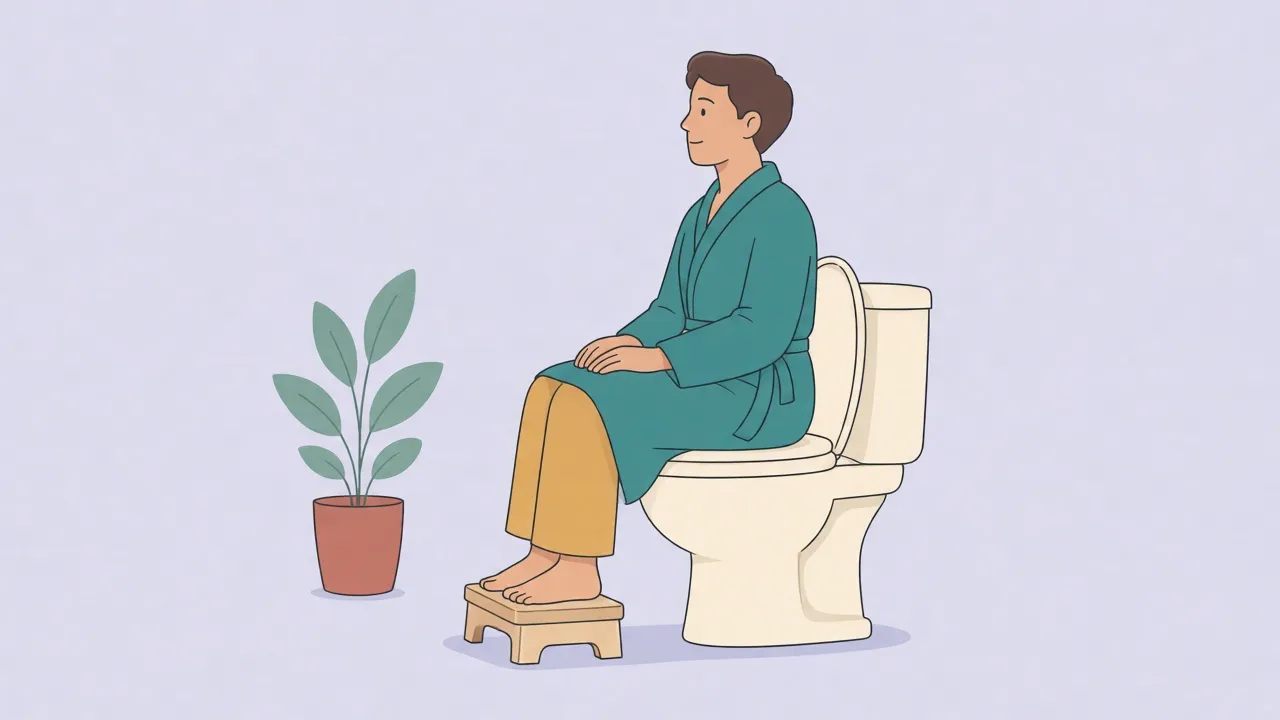
These are studies of straining, not of who later develops hemorrhoids. They still match the mechanism: less force on the cushions, less often. Feet up, knees above hips, and no hovering. The step-by-step version is on toilet habits that help hemorrhoids.
Constipation: the studies do not agree
Constipation is the cause most people expect. One study supports it. Two lines of evidence push back.
Peery and colleagues looked at 2,813 adults who had a colonoscopy in a colorectal adenoma prevention trial, and who had detailed records of bowel habits, diet, and activity. Hemorrhoids were taken from the colonoscopy reports. Of the group, 1,074 had hemorrhoids recorded. Constipation was linked to a higher prevalence (odds ratio 1.43, 95% CI 1.11 to 1.86) 5. That is the cleanest “yes” in the modern colonoscopy data.
Johanson and Sonnenberg, in 1990, compared the epidemiology of hemorrhoids with the epidemiology of constipation across U.S. and British data sets. About 10 million people in the United States reported hemorrhoids, a prevalence of 4.4%. Reports peaked from age 45 to 65 and fell after 65. Hemorrhoids before age 20 were unusual. Constipation did the opposite: it climbed after age 65 and was more common in groups where hemorrhoid reports were less common. The authors wrote that those patterns call a simple causal link into question 6. A summary of that 1990 study is the short version.
A 2024 Mendelian randomization study, which uses inherited gene variants as a stand-in for a habit, asked whether constipation and diarrhea actually cause hemorrhoids. Genetically predicted constipation did not (odds ratio 0.97, 95% CI 0.91 to 1.03). Diarrhea did not either (odds ratio 1.00, 95% CI 0.99 to 1.01). More frequent stools did (odds ratio 1.28, 95% CI 1.05 to 1.55). The authors also reported a reverse analysis that linked constipation and hemorrhoids (odds ratio 1.21, 95% CI 1.13 to 1.28) 7. Put the two directions side by side and constipation is not a settled cause. The paper itself says the clearer signals were frequent bowel movements and waist-to-hip ratio, not constipation or diarrhea.
If your stools are hard, treat that on its own merits. The food side is on the hemorrhoid diet. A single spicy meal is a different question, checked in does spicy food cause hemorrhoids.
Diarrhea
Chronic diarrhea sits next to constipation on the NIDDK list 1. Loose, frequent stools mean more wiping and more time on the toilet. The genetic study did not find that diarrhea causes hemorrhoids (odds ratio 1.00) 7. Diarrhea stays on the clinical list as a flare trigger, with little support from that genetic study as a root cause.
Long sits on the toilet
NIDDK lists sitting on the toilet for long periods 1. Two studies looked at the habit directly, and they do not match in strength.
In 2025, Ramprasad and colleagues surveyed 125 adults at a screening colonoscopy and had two endoscopists look for hemorrhoids. Forty-three percent had hemorrhoids. Sixty-six percent used a smartphone on the toilet. Among phone users, 37.3% spent more than five minutes per visit, compared with 7.1% of people who did not use a phone. After adjustment for age, sex, body mass index, exercise, straining, and fiber, phone use on the toilet was tied to a 46% higher risk (p = 0.044) 10. The study is small and cross-sectional: it cannot prove the phone came before the hemorrhoids. The full PLOS One paper is worth reading if you want the limits. We walk through them on does scrolling on the toilet cause hemorrhoids.
An earlier survey of 500 Israeli adults found toilet reading in 52.7%. Readers stayed longer. They reported hemorrhoids slightly more often (23.6% versus 18.2%), and that gap was not statistically significant. The authors called the habit common and benign 11. Longer sits show up in both studies. A clear rise in hemorrhoids shows up in one.
A low fiber diet
Low fiber is on the NIDDK cause list 1. In Peery’s colonoscopy study, people with the highest grain-fiber intake had lower odds of hemorrhoids than people with the lowest (odds ratio 0.78, 95% CI 0.62 to 0.98). The finding was for grain fiber specifically, not for every fiber type they checked 5. Sandler and Peery’s later review still treats a low-fiber diet as unproven as the historical root cause 4.
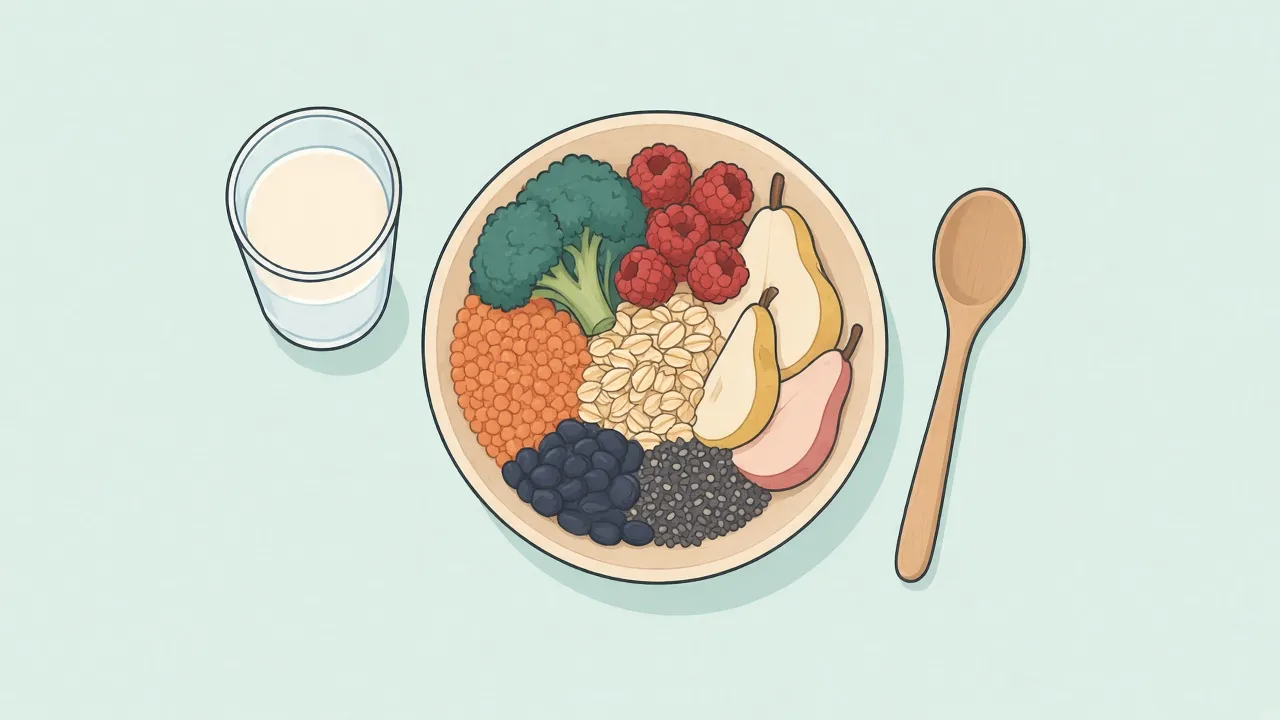
What is not in dispute is that most people eat less fiber than the guidelines suggest. A summary of U.S. intake data says only about 5% of the population meets recommendations 15. The NIDDK page on eating for hemorrhoids uses the Dietary Guidelines figure of 14 grams of fiber per 1,000 calories, or 28 grams on a 2,000-calorie day 14. Add it slowly so bloating does not make you strain in a new way.
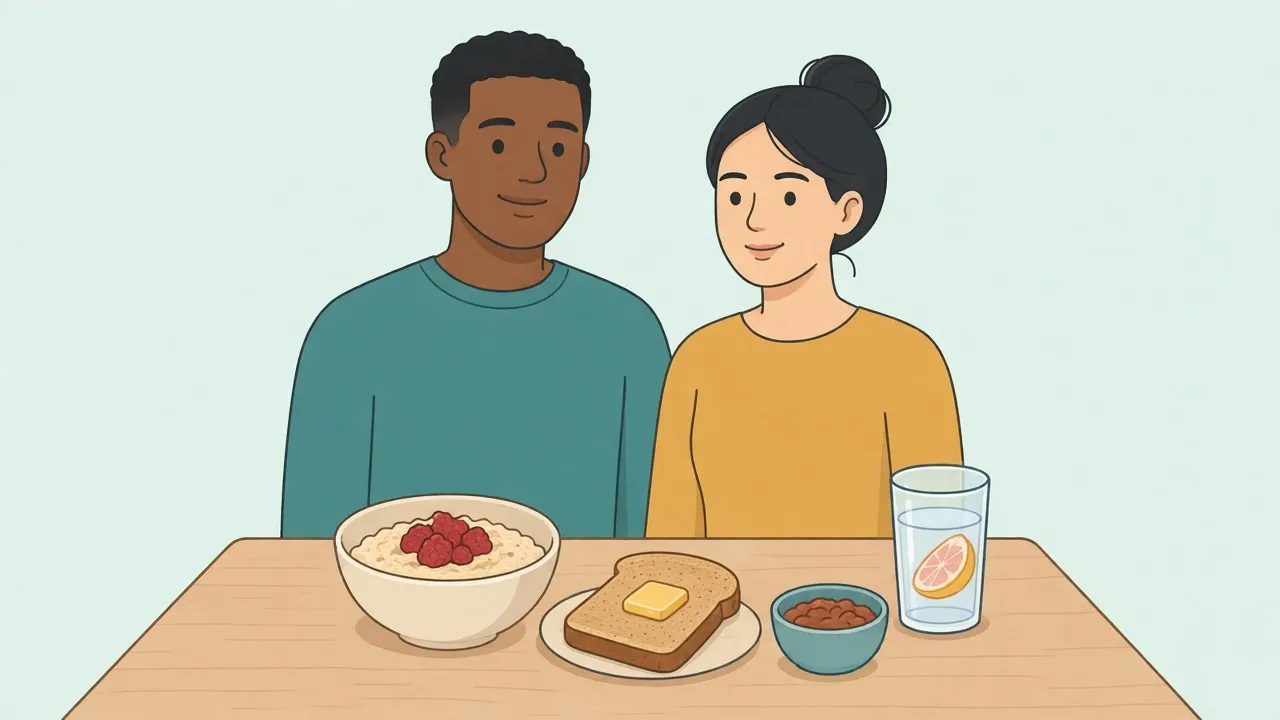
If the plate is not getting you there, a psyllium powder is a simple next step. Our notes on products are on the best fiber supplements for hemorrhoids. You can add up a normal day first with the fiber calculator.
Metamucil Sugar-Free Psyllium Powder, Orange
Best for: Most people starting fiber for hemorrhoids
The best-known psyllium powder and our top fiber pick. Psyllium is the fiber used in most of the hemorrhoid trials.
What recent buyers say
Reviews are strongly positive. It works, it tastes better than people expect, and a tub lasts. Recent buyers say it made them regular within a day or two, and they stress drinking plenty of water with it. The main complaint is the added sweetener and coloring, which some would rather avoid.
What buyers like
- Keeps people regular
- Orange flavor goes down easily
- Big tub is good value
Common complaints
- Some dislike the sweetener and coloring
- Thickens if you do not drink it quickly
Skip it if you prefer plain fiber with nothing added. Anthony's plain psyllium is the unflavored option.
Fiber as a treatment for bleeding, which is a different question from fiber as a cause, is covered with the trial numbers on bleeding hemorrhoids.
Pregnancy
Pregnancy is the cause with the clearest timing. Poskus and colleagues followed 280 pregnant women through delivery and one month after. Perianal disease developed in 43.9%. Of those cases, 1.6% appeared in the first trimester, 61% in the third trimester, 34.1% after delivery, and 3.3% at one month. Hemorrhoids were diagnosed in 114 women, 40.7% of the whole group 12. Constipation during pregnancy was a strong predictor (odds ratio 18.98, 95% CI 7.13 to 50.54). Straining in labor for more than 20 minutes and a baby heavier than 3800 grams were predictors too, with very wide confidence intervals, so the size of those risks is uncertain 12.
That is pressure during a pregnancy, measured while it is happening. Peery’s colonoscopy study asked a different question: among women already at the age of screening, did a past pregnancy show up as more hemorrhoids? Comparing women who had been pregnant with women who had not, the odds ratio was 0.93 (95% CI 0.62 to 1.40), which is no clear link 5.
Safe relief for this season is on hemorrhoids during pregnancy. Trouble that starts with a long second stage of labor is on postpartum hemorrhoids.
Aging
NIDDK lists weakening of the supporting tissues in the anus and rectum with aging, and says people older than 50 are more likely to have hemorrhoids 1. Johanson’s survey curve is more specific: reports rise through midlife, peak from 45 to 65, and decline after 65 6. The tissue-wear story from Lohsiriwat fits the rise 3. The drop after 65 is a reminder that “older” is not a straight line, and that survey reports are not the same thing as cushions seen on a scope.
Heavy lifting
Often lifting heavy objects is on the NIDDK cause list 1. The idea is the same abdominal pressure that straining produces, repeated at the gym or at work. Peery’s study measured physical activity and did not find a clear link with hemorrhoids (odds ratio 0.83, 95% CI 0.66 to 1.03) 5. That activity measure is not hours of heavy lifting. The colonoscopy and genetic studies cited here did not measure lifting, so this cause rests on the clinical list and on the straining mechanism.
During a flare, the useful change is to stop breath-holding and to ease the loads that make you strain. Exercise with hemorrhoids goes through what to keep and what to pause.
One related Peery result is easy to misread. Sedentary behavior was linked to lower odds of hemorrhoids (odds ratio 0.80, 95% CI 0.65 to 0.98), and physical activity was not clearly protective 5. That finding argues against “sitting all day at a desk causes hemorrhoids.” It does not argue against walking, and it does not excuse long sits on the toilet. Those are different kinds of sitting.
Body weight
Here the data sets disagree in public, which is useful.
Riss and colleagues examined 976 adults in an Austrian screening program. Hemorrhoids were present in 38.93%. In the multivariate analysis, each one-point increase in body mass index raised the risk of hemorrhoids by 3.5% 13.
Peery’s larger colonoscopy study did not find that. Overweight was odds ratio 0.89 (95% CI 0.72 to 1.09). Obesity was odds ratio 0.86 (95% CI 0.70 to 1.06). Neither was significant 5. The open version of that study is the place to see how they defined the groups.
Yu’s genetic study found a causal link with waist-to-hip ratio adjusted for body mass index (odds ratio 1.11, 95% CI 1.06 to 1.64) 7. When the authors tested several positive findings together, waist-to-hip ratio was no longer significant (p = 0.74), while more frequent stools still were. A higher waist measurement is a plausible pressure story. It is not a result that survived every way of analyzing the same genetic data.
Taken together: one screening study says higher body mass index matters, one colonoscopy study says overweight and obesity do not, and one genetic study says waist-to-hip ratio might, until other factors are included. Extra weight is a reasonable thing to work on if it comes with constipation or straining. It is not, by itself, a proven cause.
What is still worth changing
You do not need a perfect cause to pick a useful habit. The steps that lower straining are the ones the cause list and the mechanism point to, even where the risk-factor studies disagree 14.
- Soften the stool with food fiber, aiming near 14 grams per 1,000 calories, and add water so the fiber does not sit dry in the gut 14.
- Use a footstool if sitting on the toilet makes you push 89.
- Get up when the bowel movement is done. Keep the phone outside the bathroom 10.
- During pregnancy, treat constipation early. The third trimester is when new hemorrhoids clustered in the Poskus cohort 12.
- During a flare, skip breath-holding lifts 1.
The daily version of that list is on how to prevent hemorrhoids.
A cause you can name, such as a week of constipation or a long toilet sit, does not prove the blood is from a hemorrhoid. If one of those warning signs is present, get it checked before you spend months adjusting fiber.
Frequently asked questions
Does sitting on the toilet for a long time cause hemorrhoids?
Health agencies list long toilet sits as a cause. In a 2025 colonoscopy study, people who used a phone on the toilet were more likely to have hemorrhoids, and they were much more likely to sit longer than five minutes. An older survey of toilet reading found longer sits too, but the difference in self-reported hemorrhoids was small and not statistically significant. The safer habit is to sit only as long as the bowel movement takes.
Will hemorrhoids from pregnancy go away after the birth?
In one study that examined women through pregnancy, most new perianal problems showed up in the third trimester, and a large share appeared after delivery. A long push during labor and a baby heavier than 3800 grams were linked to hemorrhoids and fissures in that study, with wide uncertainty around the estimates. Ongoing trouble after birth has its own care steps.
Can heavy lifting cause a hemorrhoid flare?
The National Institutes of Health lists often lifting heavy objects as a cause, alongside straining and pregnancy. The big colonoscopy and genetic studies did not measure lifting, so there is no odds ratio to quote. During a flare, people usually do better if they avoid breath-holding and extra strain. The exercise guide covers how to lift while symptoms are active.
Are hemorrhoids more common after age 65?
Complaints peak between about 45 and 65, then fall after 65 in U.S. survey data from 1990. That pattern does not match constipation, which keeps rising at older ages. Supporting tissue in the anal canal does weaken with age, which is why aging stays on cause lists even though the survey curve bends down.
Does a low fiber diet cause hemorrhoids by itself?
A higher intake of grain fiber was linked to fewer hemorrhoids in one colonoscopy study. National figures also show that only about 5% of Americans meet fiber recommendations. A 2019 review still calls the low-fiber explanation unproven as the root cause. Fiber has a clearer record as a treatment for bleeding than as the sole reason hemorrhoids start.
If I lose weight, will that remove the cause?
Weight studies disagree. One screening colonoscopy study tied a higher body mass index to more hemorrhoids. A larger colonoscopy study did not. A genetic study linked waist-to-hip ratio to hemorrhoids, then found that link weakened when several factors were tested together. Extra weight is worth working on if it comes with constipation or straining. Those studies do not show that a lower weight removes cushions that have already slipped.
Sources
- 1. Symptoms & Causes of Hemorrhoids . National Institute of Diabetes and Digestive and Kidney Diseases (NIDDK) . Government
- 2. Thomson WH The nature of haemorrhoids . Br J Surg , 1975 ; 62(7):542-552 . doi:10.1002/bjs.1800620710 Study
- 3. Lohsiriwat V Hemorrhoids: from basic pathophysiology to clinical management . World J Gastroenterol , 2012 ; 18(17):2009-2017 . doi:10.3748/wjg.v18.i17.2009 Review
- 4. Sandler RS, Peery AF Rethinking What We Know About Hemorrhoids . Clin Gastroenterol Hepatol , 2019 ; 17(1):8-15 . doi:10.1016/j.cgh.2018.03.020 Review
- 5. Peery AF, Sandler RS, Galanko JA, et al. Risk Factors for Hemorrhoids on Screening Colonoscopy . PLoS One , 2015 ; 10(9):e0139100 . doi:10.1371/journal.pone.0139100 Study
- 6. Johanson JF, Sonnenberg A The prevalence of hemorrhoids and chronic constipation. An epidemiologic study . Gastroenterology , 1990 ; 98(2):380-386 . doi:10.1016/0016-5085(90)90828-o Study
- 7. Yu M, Shang Y, Han L, et al. Bowel Habits, Obesity, Intestinal Microbiota and Their Influence on Hemorrhoidal Disease: a Mendelian Randomization Study . Clin Exp Gastroenterol , 2024 ; 17:157-164 . doi:10.2147/CEG.S450807 Study
- 8. Sikirov D Comparison of straining during defecation in three positions: results and implications for human health . Dig Dis Sci , 2003 ; 48(7):1201-1205 . doi:10.1023/a:1024180319005 Study
- 9. Modi RM, Hinton A, Pinkhas D, et al. Implementation of a Defecation Posture Modification Device: Impact on Bowel Movement Patterns in Healthy Subjects . J Clin Gastroenterol , 2019 ; 53(3):216-219 . doi:10.1097/MCG.0000000000001143 Study
- 10. Ramprasad C, Wu C, Chang J, et al. Smartphone use on the toilet and the risk of hemorrhoids . PLoS One , 2025 ; 20(9):e0329983 . doi:10.1371/journal.pone.0329983 Study
- 11. Goldstein O, Shaham Y, Naftali T, et al. Toilet reading habits in Israeli adults . Neurogastroenterol Motil , 2009 ; 21(3):291-295 . doi:10.1111/j.1365-2982.2008.01204.x Study
- 12. Poskus T, Buzinskienė D, Drasutiene G, et al. Haemorrhoids and anal fissures during pregnancy and after childbirth: a prospective cohort study . BJOG , 2014 ; 121(13):1666-1671 . doi:10.1111/1471-0528.12838 Study
- 13. Riss S, Weiser FA, Schwameis K, et al. The prevalence of hemorrhoids in adults . Int J Colorectal Dis , 2012 ; 27(2):215-220 . doi:10.1007/s00384-011-1316-3 Study
- 14. Eating, Diet, & Nutrition for Hemorrhoids . National Institute of Diabetes and Digestive and Kidney Diseases (NIDDK) . Government
- 15. Quagliani D, Felt-Gunderson P Closing America's Fiber Intake Gap: Communication Strategies From a Food and Fiber Summit . Am J Lifestyle Med , 2017 ; 11(1):80-85 . doi:10.1177/1559827615588079 Review