Quick answer
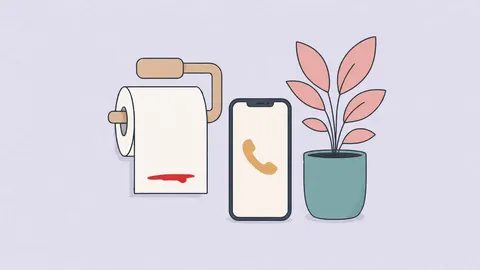
An anal skin tag is a soft, painless flap of skin at the edge of the anus. Many are left behind after a swollen or clotted external hemorrhoid stretches the skin. Most need nothing beyond reassurance. Removal is a small procedure for tags that make cleaning hard. A tag that hurts, bleeds or grows should be checked.
Product links on this page go to Amazon. As an Amazon Associate I earn from qualifying purchases. No brand pays for a place on our lists. How we choose products
Key takeaways
- Surgeons describe anal skin tags as painless, soft tissue at the outside of the anus, often left after a blood clot in an external hemorrhoid stretches the skin.
- Skin tags turn up in about one in three people seen for common anal problems.
- A skin tag is soft and painless. A new thrombosed hemorrhoid is firm, tender and often bluish.
- In a study of 170 people with inflammatory bowel disease, three in four of those with anal skin tags had Crohn's disease rather than ulcerative colitis. Tags can be an early sign of Crohn's.
- Usually nothing is done beyond reassurance. If a tag makes cleaning hard, removal under local anesthetic is a short outpatient procedure.
On this page
Anal skin tags are small flaps of extra skin at the edge of the anus. They are soft, usually painless, and very common. Many are left behind after a hemorrhoid: a swollen or clotted vessel stretches the skin, the swelling goes down, and the stretched skin stays. People often find one after a flare and assume the hemorrhoid has not healed.
This page explains how a skin tag differs from a hemorrhoid, what causes tags, when one can point to another condition such as Crohn’s disease, and when removal is worth it. If a lump appeared suddenly and hurts, read thrombosed hemorrhoid first, because a fresh clot is treated differently.
What an anal skin tag is
The American Society of Colon and Rectal Surgeons patient guide to hemorrhoids describes skin tags as painless, soft tissue felt on the outside of the anus 1. They can be the leftover effect of an earlier problem with an external hemorrhoid: a blood clot stretches the overlying skin, and the skin stays stretched after the body absorbs the clot 1. A review of hemorrhoid disease says painless external skin tags often come from a previous swollen or thrombosed external hemorrhoid 2.
Not every tag has a clear starting point. The surgeons note that some people have skin tags without any obvious preceding event 1. They are common: one surgical report found tags in about a third of people with benign anal problems 3.
Skin tag or hemorrhoid?
The two often sit side by side, which is why they are confused.
| Anal skin tag | External hemorrhoid | Thrombosed hemorrhoid | |
|---|---|---|---|
| Feel | Soft, flat or flap-like | Soft swelling that comes and goes | Firm, round, tense lump |
| Color | Skin-colored | Skin-colored or slightly bluish | Purple or blue |
| Pain | Usually none | Ache or itch in a flare | Often severe, starting suddenly |
| Changes | Stays much the same | Swells and shrinks | Peaks in the first days, then slowly settles |
A tag is extra skin with no swollen blood vessel inside it, so it does not shrink with fiber or soaks the way a hemorrhoid does. External hemorrhoids, and why they itch and ache, are covered in external hemorrhoids.

What causes anal skin tags?
After a hemorrhoid
This is the most common story. A thrombosed external hemorrhoid, a blood clot under the skin, stretches the skin over it 1. Once the clot is absorbed, the skin does not shrink back fully 12.
Next to an anal fissure
A chronic anal fissure, a tear in the lining of the anus that has lasted weeks, can grow a small skin tag at its outer end, often called a sentinel pile 4. This tag sits next to the tear and is easy to mistake for a hemorrhoid. The clue is the pain: fissures cause sharp pain during a bowel movement and burning afterward. The differences are laid out in hemorrhoid or anal fissure.
Crohn’s disease
Skin tags are also a known sign of Crohn’s disease, a type of inflammatory bowel disease (IBD). In a study of anal skin tags in 170 people with IBD examined at colonoscopy, 75.4 percent of the people with tags had Crohn’s disease and 24.6 percent had ulcerative colitis 5. The authors described a typical Crohn’s tag, sometimes called an “elephant ear”: raised, soft or firm, painless, and sometimes multiple 5. They said tags like these can herald a Crohn’s diagnosis, especially in young people with diarrhea, belly pain or poor growth 5.
In a Welsh study, tags removed from 26 people with Crohn’s disease showed the disease’s typical inflammation (granulomas) in 9 of them, while tags from 26 people without Crohn’s showed none 6.
When a skin tag needs a doctor
A tag that is soft, painless and unchanged for months is usually nothing to worry about. The ASCRS guide says that usually nothing is done to treat tags beyond reassurance 1. The NHS advises seeing a GP if you notice a change around your anus that is not normal for you 9. Have a lump checked if:
US guidelines recommend colon cancer screening from age 45 for adults at average risk 10. A doctor can usually tell a tag from a hemorrhoid, a fissure tag or another growth by looking. Unusual lumps can be removed and sent to a lab.
Living with a skin tag
Tags bother people in two ways. ASCRS, the surgeons’ society, notes they can interfere with cleaning after a bowel movement, and that some people simply do not like how they look 1. Leftover stool on the skin is one of the main causes of anal itching 8, which is why a tag that traps stool can itch.
- Rinse with water after a bowel movement, with a bidet, a peri bottle or a damp cloth, instead of rubbing with dry paper.
- Pat dry gently.
- Skip scented wipes and soap on the area.
- Keep stools soft with fiber and water, so you wipe less.
How to stop the itch when it has already started is in itchy anus: causes and relief. Rinse bottles and bidet attachments are compared on the best bidets for hemorrhoids.
Rinsing instead of wiping, at home or on the go
Anal skin tag removal
Surgical removal is occasionally considered when a tag makes cleaning hard or causes ongoing irritation 1. It is a small procedure. In the Crohn’s tissue study, tags were removed under local anesthetic as outpatients 6, and tags are also sometimes removed during another anal operation 3.
Removal used to be avoided in people with Crohn’s disease because of fears that the wound would not heal. A study of 97 people with IBD who had hemorrhoid or skin tag procedures found few short-term complications, and the later need for major rectal surgery seemed to come from the course of the Crohn’s disease itself, not the procedure 7. The authors suggested selective tag removal in people whose bowel disease is well controlled 7.

Do not cut, freeze, burn or tie off a tag at home. You cannot be sure a lump is only a tag without an exam, and no guideline recommends removing one yourself. If a tag is part of a hemorrhoid problem that keeps coming back, removal can be discussed alongside the treatments in hemorrhoid procedures.
Skin tags and hemorrhoids that keep coming back
A tag on its own does not mean your hemorrhoids are active. If you also have bleeding, swelling or a lump that comes out with bowel movements, that part is the hemorrhoid, and fiber, short toilet sits and warm soaks are still the first steps. The UK name for the same condition is piles, covered in piles: symptoms, causes and treatment, and the full overview is in hemorrhoids: what they are and how to get relief.
Frequently asked questions
Do anal skin tags go away on their own?
Usually not. A skin tag is stretched skin, so it does not shrink the way a swollen hemorrhoid does. A tag left by a recent clot may look smaller once the last of the swelling settles, but the flap itself tends to stay.
Is an anal skin tag a hemorrhoid?
Not exactly. A hemorrhoid is a cushion of blood vessels that can swell, bleed and shrink again. A skin tag is extra skin with no swollen vessel inside, often left over after an external hemorrhoid. The two often appear together.
Can I remove an anal skin tag at home?
No. Cutting, burning or tying off a tag at home is not recommended by any guideline, and you cannot be sure a lump is only a tag without an exam. A clinician can remove one under local anesthetic in a short visit.
Are anal skin tags a sign of cancer?
A soft, painless tag that has not changed in years is very unlikely to be cancer. A lump that is hard, grows, bleeds, itches constantly or forms a sore is different and should be examined.
Do anal skin tags cause itching?
They can. Surgeons say tags can get in the way of cleaning after a bowel movement, and small amounts of stool left on the skin are a common cause of anal itching. Rinsing with water and patting dry usually helps.
Sources
- 1. Hemorrhoids: Expanded Information . American Society of Colon and Rectal Surgeons . Guideline
- 2. Sun Z, Migaly J Review of Hemorrhoid Disease: Presentation and Management . Clin Colon Rectal Surg , 2016 ; 29(1):22-29 . doi:10.1055/s-0035-1568144 Review
- 3. Spanos CP Anal skin tags: removal made simple . Colorectal Dis , 2012 ; 14(10):e747-8 . doi:10.1111/j.1463-1318.2012.03087.x Study
- 4. Anal Fissure Expanded Information . American Society of Colon and Rectal Surgeons , 2020 . Reference
- 5. Bonheur JL, Braunstein J, Korelitz BI, et al. Anal skin tags in inflammatory bowel disease: new observations and a clinical review . Inflamm Bowel Dis , 2008 ; 14(9):1236-9 . doi:10.1002/ibd.20458 Study
- 6. Taylor BA, Williams GT, Hughes LE, et al. The histology of anal skin tags in Crohn's disease: an aid to confirmation of the diagnosis . Int J Colorectal Dis , 1989 ; 4(3):197-9 . doi:10.1007/BF01649703 Study
- 7. McKenna NP, Lightner AL, Habermann EB, et al. Hemorrhoidectomy and Excision of Skin Tags in IBD: Harbinger of Doom or Simply a Disease Running Its Course? . Dis Colon Rectum , 2019 ; 62(12):1505-1511 . doi:10.1097/DCR.0000000000001524 Study
- 8. Nasseri YY, Osborne MC Pruritus ani: diagnosis and treatment . Gastroenterol Clin North Am , 2013 ; 42(4):801-13 . doi:10.1016/j.gtc.2013.09.002 Review
- 9. Piles (haemorrhoids) . NHS , 2026 . Government
- 10. US Preventive Services Task Force Screening for Colorectal Cancer: US Preventive Services Task Force Recommendation Statement . JAMA , 2021 ; 325(19):1965-1977 . doi:10.1001/jama.2021.6238 Guideline