Quick answer
A sitz bath is a 10 to 15 minute soak in a few inches of warm water, about 104 degrees F, two or three times a day. Use a basin on the toilet or a bathtub. Plain water is enough. Pat dry. Warm water lowered anal pressure in studies. See a doctor if you are no better after a week.
Product links on this page go to Amazon. As an Amazon Associate I earn from qualifying purchases. No brand pays for a place on our lists. How we choose products
Key takeaways
- MedlinePlus says to sit in warm water for 10 to 15 minutes, and the NIDDK says to take a warm sitz bath several times a day for pain.
- In a 1986 study, water at 40 degrees C lowered resting anal pressure, while water at 5 degrees C and at room temperature did not.
- In a 1993 study, a 10-minute warm bath dropped internal sphincter pressure, and the effect lasted 25 to 70 minutes. Hotter water relaxed the muscle more, and skin burns are a reported risk.
- A 2005 review found little clinical proof that sitz baths treat anorectal problems, including only one randomized comparison with a placebo.
- After hemorrhoid surgery, a 2025 trial of 166 people found ice packs eased pain more than warm sitz baths in the first 16 hours.
On this page
A sitz bath is a warm soak of the anal area in a few inches of water. People use it for hemorrhoid pain and itching. You can do it with a plastic basin on the toilet or in a bathtub. This page covers the water temperature, how long to sit, how often, how to dry off, what to add, and how to keep the basin clean.
The NIDDK page on hemorrhoid treatment suggests a warm sitz bath several times a day for pain, along with fiber, fluids, and less straining 1. MedlinePlus describes the same soak as either a regular bath or a special plastic tub with a few inches of warm water 2. Where a sitz bath sits in the wider plan, next to creams and fiber, is in hemorrhoid treatment.
Warm water can relax the muscle at the anal opening for a while. That is the finding from two small pressure studies 56. A later review found little clinical proof that the soaks heal hemorrhoids 7. Use them for comfort while stool gets softer. If you need a plan for the next two days, start with how to get rid of hemorrhoids fast.
A basin on the toilet or a bathtub
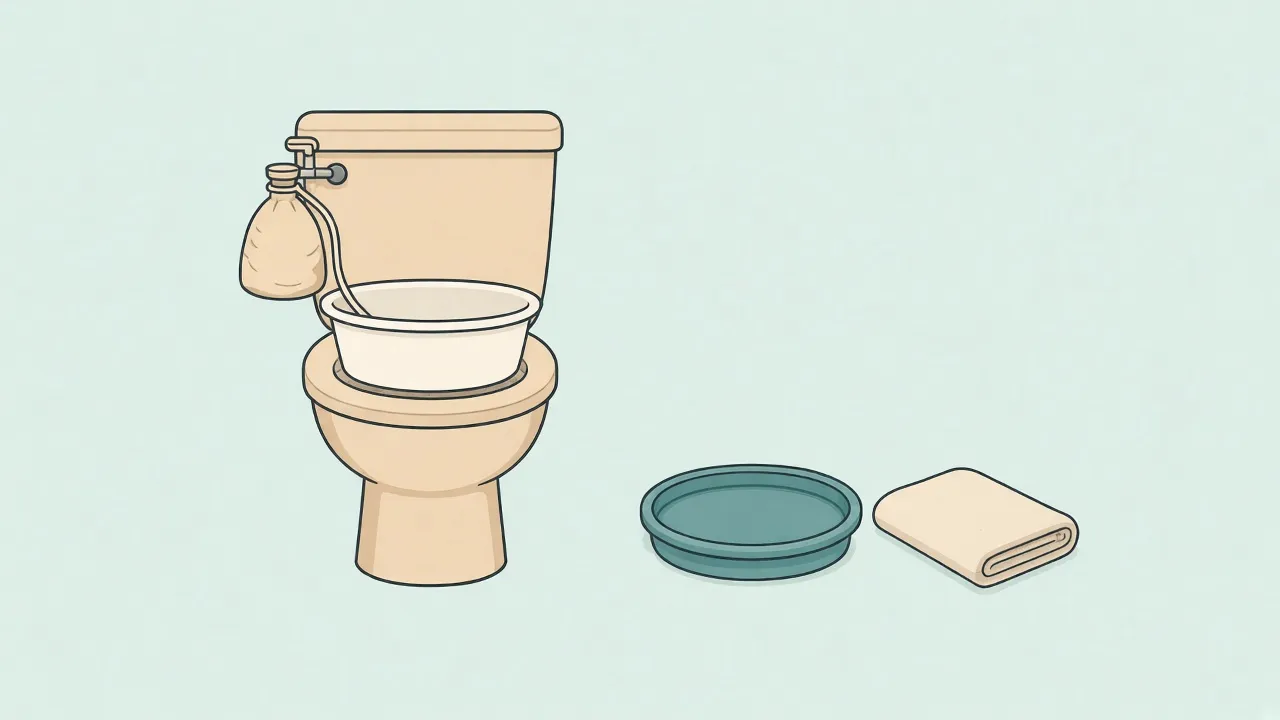
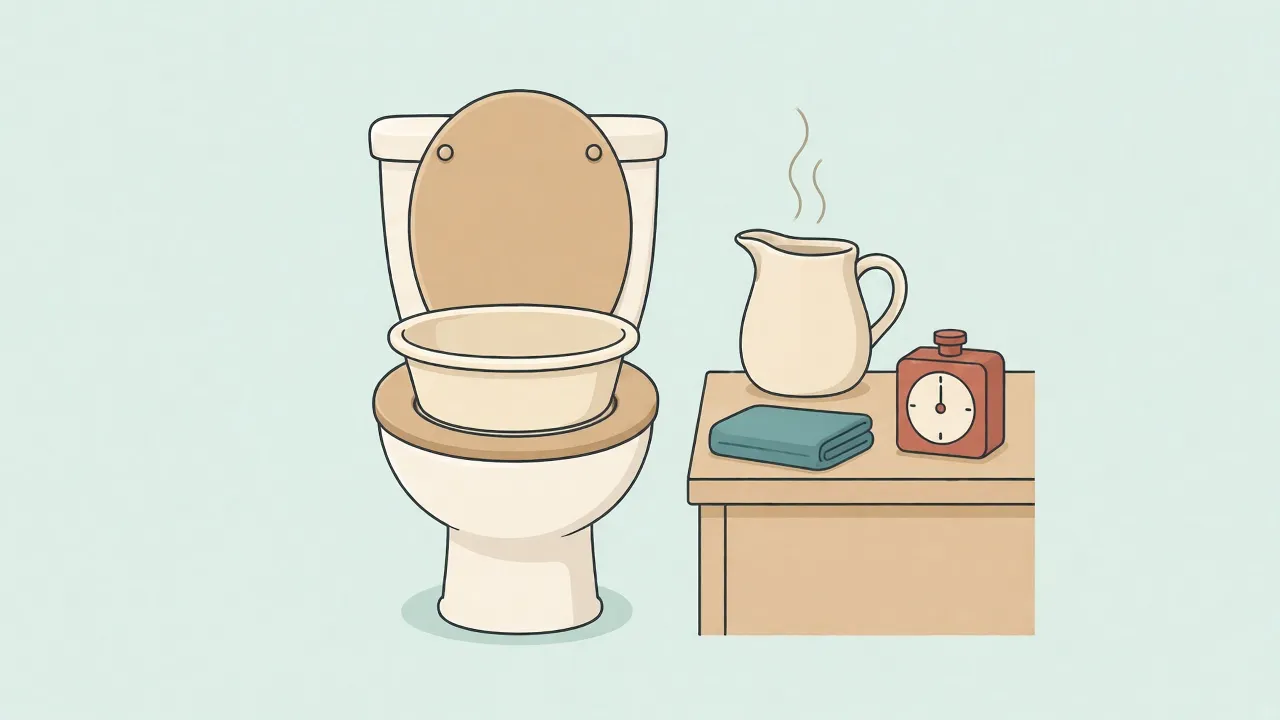
MedlinePlus says either setup is fine: a regular bath, or a plastic tub that lets you sit in a few inches of warm water 2. The basin rests on the toilet seat. You soak the sore area and stay dressed from the waist up. A bathtub does the same job if you do not have a basin. Fill it shallow if you only want the anal area in the water. A deeper bath is still a warm soak. The hard part after surgery, or late in pregnancy, is climbing in and out.
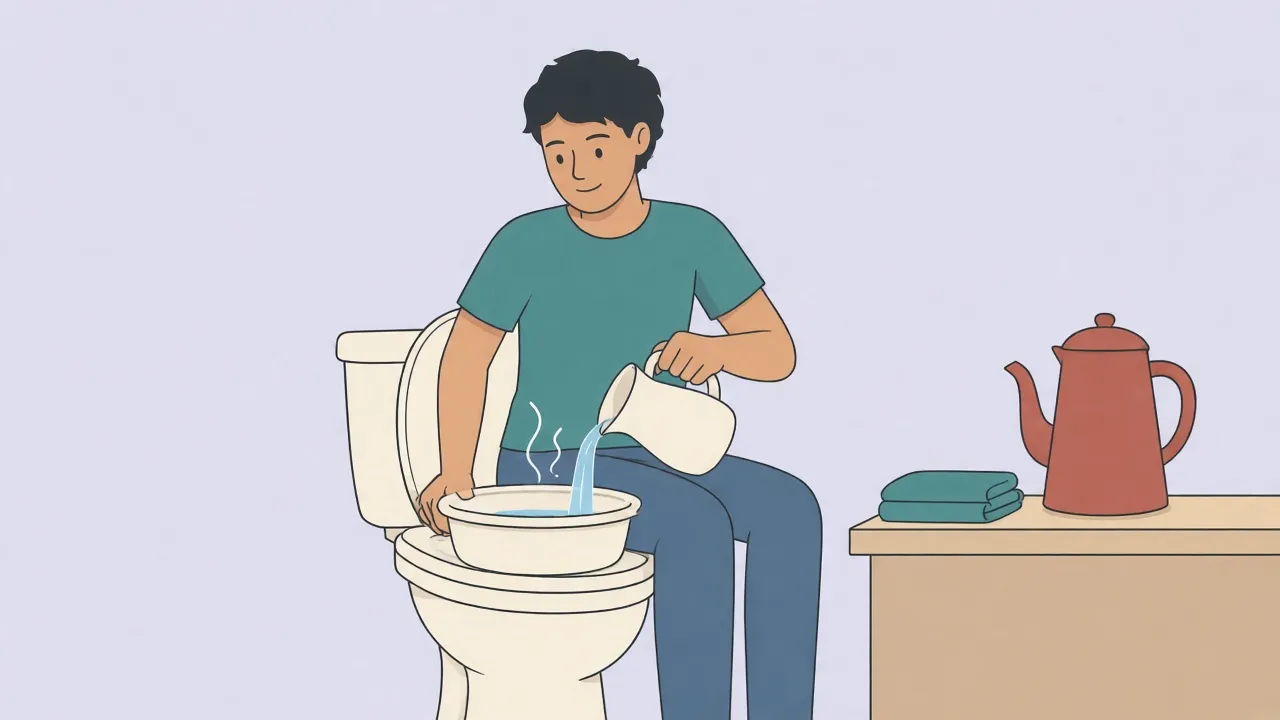
People who have used a foldable basin after surgery often say the toilet is easier than a bathtub. The basin in the card below sits on the seat, folds flat, and drains into the bowl. Some people with wider hips find it narrow. Roomier basins are on the best sitz baths.
Fivona Foldable Sitz Bath
Best for: Most people, especially after childbirth or surgery
Our top sitz bath. It sits steady on the toilet, folds flat for storage and drains without spills.
What recent buyers say
August 2026 reviews praise how steady it feels on the toilet and how easily it folds into a cabinet. One reviewer used it after hemorrhoid surgery and found it far easier than getting in and out of a tub. The only real split is size, and people with wider hips sometimes find it narrow.
What buyers like
- Stays steady on the toilet
- Folds flat for storage
- Drains cleanly into the bowl
Common complaints
- Narrow for wider hips
Skip it if you have wide hips. The Pochik has a roomier seat.
How to take a sitz bath
Use warm water, not hot. A 1986 pressure study immersed the anus in water at 40 degrees C (104 degrees F) for 5 minutes 5. Resting anal pressure fell. Water at 5 degrees C and at 23 degrees C (room temperature) did not change the pressure 5. A 1993 study used 10-minute baths at 40, 45, and 50 degrees C 6. Pain relief was stronger and lasted longer at the higher temperatures, and the internal sphincter relaxed more 6. A 2005 review listed skin burns among reported complications of sitz baths 7. Stay near 40 degrees C. If the water stings your wrist, it is too hot. Do not copy the 45 or 50 degree baths at home.
How long: the MedlinePlus medical encyclopedia says to sit in warm water for 10 to 15 minutes 3. The pressure studies used 5 minutes and 10 minutes and still recorded a drop in pressure 56. Ten to 15 minutes is a reasonable home soak.
How often: NIDDK and MedlinePlus say several times a day 12. A pregnancy program used three soaks a day 8. Two or three times a day is the pattern those sources support. Morning, after a bowel movement, and evening is a simple way to hit three.
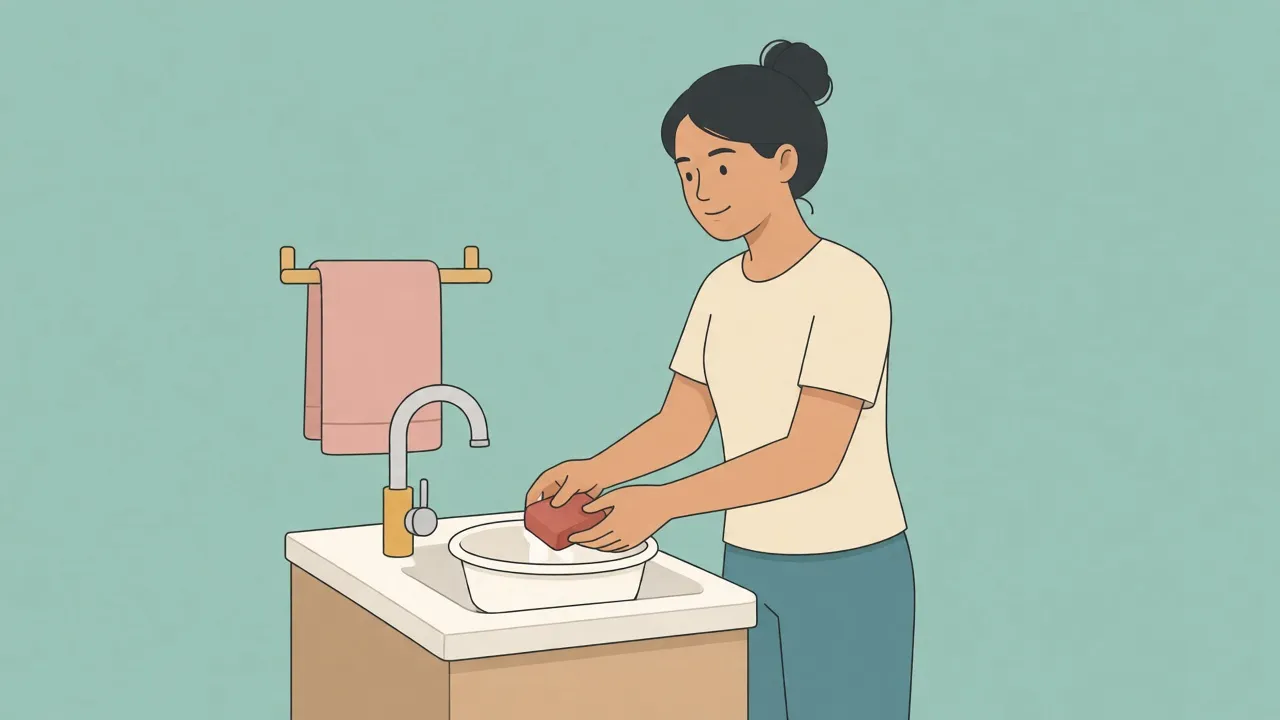
- Wash the basin with soap and hot water if it has been used before. Set it on the toilet so it sits flat.
- Fill it with a few inches of warm water, about 40 degrees C (104 degrees F). Test it with your wrist.
- Sit for 10 to 15 minutes. A timer keeps the soak from turning into a long sit.
- Stand up slowly. Warm water can make some people lightheaded.
- Pat the skin dry with a soft towel. Do not rub.
- Empty the basin into the toilet, wash it, and let it dry.
The NHS piles page says to pat the skin dry, and to avoid rubbing 4. MedlinePlus says too much rubbing or cleaning can make external hemorrhoid symptoms worse 2. After you pat dry, a short course of cream is optional. How those products differ, and the 7-day limit on hydrocortisone, is in over-the-counter hemorrhoid treatment.
What to add to the water
The pressure studies used plain warm water 56. You do not need salt, baking soda, vinegar, or a scented soak for the muscle to relax the way those studies measured.
One comparative study in pregnancy did add salt. It followed 495 pregnant women 8. The sitz group, 284 women, used a salty warm soak three times a day, with 20 grams of table salt. The cream group, 211 women, used a topical cream twice a day. Both groups also used a glycerin suppository before bowel movements and a daily fiber supplement. The authors reported complete healing in all 284 women in the salt-soak group and in 179 of 211 (84.8 percent) in the cream group 8. This was not a randomized trial, and the salt was only one part of a package that included fiber. It does not prove that salted water heals hemorrhoids on its own.
A 2005 review of the sitz bath literature found the clinical evidence thin 7. The authors located one randomized study that compared a sitz bath with placebo, and they concluded there was not enough science to say the soaks treat anorectal disorders 7. Plain warm water is the honest home version: it matches the pressure studies, and it skips additives that have not been shown to do more. The magnesium question is covered in Epsom salt for hemorrhoids.
Why warm water can ease the pain
The internal anal sphincter is the smooth muscle that keeps the anal canal closed at rest. When it squeezes hard, pain from a fissure or a swollen hemorrhoid gets worse. Both pressure studies point at that muscle.
In the 1986 study, 26 volunteers without anorectal complaints and 31 patients with hemorrhoids, anal fissure, or proctalgia fugax had resting pressure measured, then sat with the anus in water 5. At 40 degrees C, pressure fell in every subject. After a 5-minute soak at that temperature, the drop lasted about 15 minutes in healthy volunteers and about 30 minutes in the patients 5. Cold water and room-temperature water did not do this.
In the 1993 study, 18 healthy volunteers and 28 patients (18 with fissures and 10 with hemorrhoids) sat in a warm bath for 10 minutes at 40, 45, or 50 degrees C 6. Rectal temperature did not change. Pressure in the anal canal, and the electrical activity of the internal sphincter, dropped during the bath and climbed back over 25 to 70 minutes afterward 6. The hotter the bath, the bigger the drop and the longer it lasted. The author called this a “thermosphincteric reflex,” meaning a nerve reflex to warmth, because the muscle itself did not heat up 6.
That is a comfort effect with a timer on it, not a cure. External hemorrhoids can still itch after the pressure returns. Fiber and shorter toilet sits do the slower work.
Sitz baths in pregnancy
Hemorrhoids are common late in pregnancy. The NHS page on piles in pregnancy says to keep stools soft with fiber-rich foods and plenty of water, to avoid straining, to clean with moist paper, and to pat dry 11. It also says to ask a doctor, midwife, or pharmacist before using a cream, because those products treat the soreness and not the cause 11. A warm soak does not require a medicine. It can sit alongside the fiber.
The salt-soak program described above is the largest pregnancy comparison we have of sitz baths and cream 8. Read it as one hospital’s package (salt water three times a day, plus fiber and glycerin suppositories), not as proof that every pregnant woman needs salt in the basin. Plain warm water, two or three times a day, for 10 to 15 minutes, is a reasonable home version. Ask your obstetric provider if you have been told to limit baths, if the water makes you dizzy, or if you see bleeding that is new. Day-to-day care is in hemorrhoids during pregnancy and postpartum hemorrhoids.
Sitz baths after surgery
Surgeons often send people home with soak instructions. The evidence on the first day is more specific than “warm water is always best.”
A 2025 randomized trial compared ice packing with warm sitz baths after Ferguson hemorrhoidectomy (the closed operation that cuts the hemorrhoid out) 9. It included 166 people: 82 used ice and 84 used warm sitz baths. In the first 16 hours, pain scores were lower with ice. At 24 hours, 76.8 percent of the ice group had no swelling or only mild swelling, compared with 56.0 percent of the sitz group. A wound score at 7 days was 2.56 with ice and 3.27 with sitz baths, and a lower score meant a calmer wound. Morphine use in the first 24 hours averaged 4.58 mg with ice and 6.39 mg with sitz baths 9. The authors noted limits: one hospital, and a short follow-up.
If your discharge papers say ice for the first day, that trial supports it. If they say warm soaks, follow those. A basin is usually easier than a bathtub while sitting down hurts. When to use cold and when to use warm is compared in ice or heat for hemorrhoids. The week-by-week picture after the operation is in hemorrhoidectomy recovery.
How to clean the basin
The 2005 review found five articles that reported complications: spread of herpes, a streptococcus outbreak between mothers and newborns, and skin burns 7. Most of the sitz bath papers the authors found came from gynecology and nursing journals, and the infection reports fit hospital settings more than a home bathroom 7. They are still a reason to treat the basin like a dish you reuse.
- Wash it with soap and hot water after every soak.
- Rinse it and let it dry before you put it away. Do not leave water standing in it.
- Do not share it while you or someone else has a skin infection, open skin, or a cold sore nearby.
- Skip water hot enough to redden the skin.
A scented soak from a jar is optional and unproven for hemorrhoids. If you use one, wash the basin afterward so residue does not sit on the plastic.
If the soaks are not enough
NIDDK says to follow up if home treatment, including soaks and store products, has not helped after 1 week 1. MedlinePlus says the same about symptoms that are still there after a week of care at home 2. The NHS says to see a GP if piles are getting worse, if home treatment has not helped, or if they keep coming back 4.
Bleeding has other causes. The US Preventive Services Task Force recommendation on colorectal cancer screening says screening should start at age 45 for adults at average risk 12.
NIDDK says to seek care right away for severe anal pain and rectal bleeding, particularly with abdominal discomfort, diarrhea, or fever 1. If a week of soaks and softer stools has not changed the pain or the bleeding, the next step is a clinician visit, and sometimes an office procedure. Those options are compared in hemorrhoid procedures.

When to see a doctor for hemorrhoids: red flags, which clinician to book, what the exam includes, how to prepare, and telehealth limits.
Frequently asked questions
Do I need a special sitz bath basin?
No. MedlinePlus says a regular bath works, and so does a plastic tub that lets you sit in a few inches of warm water. A basin on the toilet is easier if climbing into a bathtub hurts, which is common after surgery or late in pregnancy. The soak itself is the same: warm water on the sore area.
Will a sitz bath shrink a hemorrhoid?
Warm water can ease pain and itching for a while. Small lab studies found it lowers pressure in the internal anal sphincter. A 2005 review found little proof that the soaks heal hemorrhoids, and a gastroenterology review says the scientific data are limited. Keep the fiber and the short cream course going while you soak.
Can I add Epsom salt or herbs?
The studies that measured anal pressure used plain warm water. One pregnancy program added table salt, and those women also took fiber. There is no strong trial showing that salt, Epsom salt, or a scented soak works better than plain water for hemorrhoids. Plain warm water is enough.
How many sitz baths a day is too many?
Government pages say several times a day. One pregnancy program used three a day. Two or three soaks, about 10 to 15 minutes each, matches that advice. If your skin gets dry or irritated, cut back to once or twice and pat dry. Stop and call a doctor if you feel dizzy in the warm water.
Should I use ice or a sitz bath after hemorrhoid surgery?
Follow the instructions you were sent home with. In one trial after hemorrhoid removal, ice packs eased pain more than warm sitz baths in the first 16 hours and swelling looked better at 24 hours. Many discharge plans still include warm soaks after that first day. A basin is often easier than a bathtub while you are sore.
Can I share a sitz bath basin?
Give everyone their own basin, or wash it with soap and hot water and let it dry before the next person uses it. A 2005 review found reports of infections spread in sitz-bath settings, including herpes and a strep outbreak between mothers and newborns. Those were mostly hospital reports. At home, do not share a basin while anyone has a skin infection.
Sources
- 1. Treatment of Hemorrhoids . National Institute of Diabetes and Digestive and Kidney Diseases (NIDDK) . Government
- 2. Hemorrhoids . MedlinePlus, US National Library of Medicine . Government
- 3. Hemorrhoids: MedlinePlus Medical Encyclopedia . MedlinePlus, US National Library of Medicine . Government
- 4. Piles (haemorrhoids) . NHS , 2026 . Government
- 5. Dodi G, Bogoni F, Infantino A, et al. Hot or cold in anal pain? A study of the changes in internal anal sphincter pressure profiles . Dis Colon Rectum , 1986 ; 29(4):248-251 . doi:10.1007/BF02553028 Study
- 6. Shafik A Role of warm-water bath in anorectal conditions. The "thermosphincteric reflex" . J Clin Gastroenterol , 1993 ; 16(4):304-308 . doi:10.1097/00004836-199306000-00007 Study
- 7. Tejirian T, Abbas MA Sitz bath: where is the evidence? Scientific basis of a common practice . Dis Colon Rectum , 2005 ; 48(12):2336-2340 . doi:10.1007/s10350-005-0085-x Review
- 8. Shirah BH, Shirah HA, Fallata AH, et al. Hemorrhoids during pregnancy: Sitz bath vs. ano-rectal cream: A comparative prospective study of two conservative treatment protocols . Women Birth , 2018 ; 31(4):e272-e277 . doi:10.1016/j.wombi.2017.10.003 Study
- 9. Chen PC, Kao YK, Yang PW, et al. Ice Packing Versus Warm Sitz Baths for Post-hemorrhoidectomy Pain Management: A Randomized Controlled Trial . Dis Colon Rectum , 2025 ; 68(7):865-874 . doi:10.1097/DCR.0000000000003707 Clinical trial
- 10. Qureshi W, Hoang S, Frye J, et al. AGA Clinical Practice Update on Diagnosis and Treatment of Hemorrhoids: Expert Review . Clin Gastroenterol Hepatol , 2026 ; 24(7):1773-1781 . doi:10.1016/j.cgh.2026.04.008 Guideline
- 11. Piles in pregnancy . NHS . Government
- 12. US Preventive Services Task Force Screening for Colorectal Cancer: US Preventive Services Task Force Recommendation Statement . JAMA , 2021 ; 325(19):1965-1977 . doi:10.1001/jama.2021.6238 Guideline