Quick answer
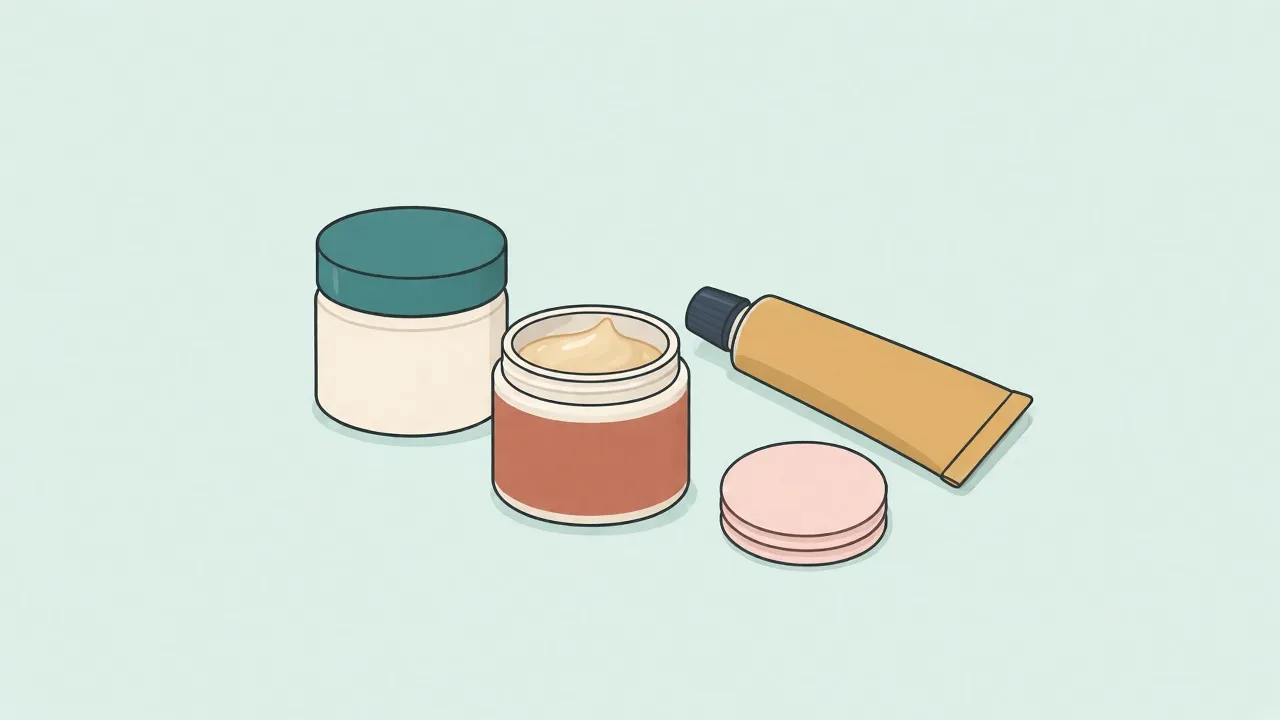
Postpartum hemorrhoids are common after a vaginal birth and can follow a cesarean too. The NHS says they usually ease within days or weeks. Rinse instead of wiping, use a wrapped cold pack, sit in warm water, and keep stools soft. Check before a medicated cream if you are breastfeeding.
Product links on this page go to Amazon. As an Amazon Associate I earn from qualifying purchases. No brand pays for a place on our lists. How we choose products
Key takeaways
- The NHS says piles are very common after birth and usually settle within a few days or weeks, with fruit, vegetables, whole grains, water, and less straining as the first steps.
- In an exam study of 280 pregnancies, about a third of new problems around the anus started after delivery, and about 1 in 5 of those cases followed a cesarean.
- In a survey of 1,295 women, self-reported hemorrhoids fell from 30 percent to 13 percent between 8 and 24 weeks after birth.
- A Cochrane review found no trials it could use on treating constipation after birth, and the prevention trials that exist are old and low certainty.
- The NHS says hydrocortisone treatments for piles can be used while breastfeeding for a short time, and that you should wash your hands before you pick up the baby.
On this page
Postpartum hemorrhoids are swollen veins at the anus that flare during late pregnancy or in the days after the baby arrives. The NHS page on your body after the birth says piles are very common after birth and usually disappear within a few days or weeks 1. That is the usual course. A survey that followed women for six months found a smaller group still reporting them at 24 weeks 3.
They are not limited to vaginal birth. In an exam study of 280 pregnancies, 34.1 percent of new problems around the anus started after delivery, and 19.5 percent of the women who developed those problems had a cesarean 2. If yours began during pregnancy, the guide to hemorrhoids during pregnancy covers the trimester pattern and the creams studied before birth. This page is the first weeks at home: rinsing, cold, warm soaks, the first bowel movement, breastfeeding, and when to get checked.
Hemorrhoids after a vaginal birth
Pushing is the moment many people feel a new lump. In the Lithuanian exam study, pushing for more than 20 minutes and a baby heavier than 3,800 grams (about 8 pounds 6 ounces) each went with much higher odds of hemorrhoids or an anal fissure, a small tear in the anal lining 2. A 2024 study of 190 women found a similar pattern: a second stage of labor of 38 minutes or longer, and a baby of 3,380 grams or more, went with higher odds of problems around the anus 5.
The symptom that shows up right after a vaginal birth is often a clot under the skin at the anal edge. A Belgian questionnaire study called that the most typical pattern immediately postpartum. A hemorrhoid that slips out was typical both in the third trimester and right after birth 4. Those labels came from symptom lists, not from a scope. Sharp pain with the bowel movement can be a fissure, sometimes along with the hemorrhoid. External hemorrhoids are the ones that hurt and itch on the outside skin.
The American Society of Colon and Rectal Surgeons’ patient page says pain from a thrombosed external hemorrhoid, the clot kind, often peaks about 48 to 72 hours after it starts and is largely easing after about four or five days 13. Warm baths, pain relief your clinician has cleared, and fiber are the usual care if you are already improving. If the pain is severe in those first days, call, because an office visit to remove the clot is sometimes offered while the pain is still at its worst.
Stitches and a tear change how the first week feels, and they are a separate injury from the hemorrhoid. The NHS says stitches usually dissolve as the cut or tear heals, that a daily wash in plain warm water helps prevent infection, and that you should pat dry 1.
Hemorrhoids after a cesarean
A cesarean avoids a long vaginal push. Constipation, long sitting, and the pressure of pregnancy are already on the list of hemorrhoid causes from ACOG’s digestive FAQ 6. In the exam study, 24 of the 123 women with a new problem around the anus had delivered by cesarean, which is 19.5 percent 2.
A survey of 1,295 women in Australia compared birth methods. After adjusting for the type of birth, first-time mothers reported more perineal pain. Compared with unassisted vaginal birth, women who had a cesarean reported more exhaustion, less sleep, and more bowel problems in the first 8 weeks, and they reported less perineal pain and less leaking of urine 3. Bowel problems in that paper were a broad category, not a hemorrhoid count. The practical reading is still useful: after a cesarean, watch constipation even when the perineum itself is not sore.
Some medicines can slow the bowel. ACOG lists certain medications as a cause of constipation, and long periods of sitting as a cause of hemorrhoids 6. If a prescribed pain medicine is making stools hard, ask the person who prescribed it before you stop it. Short walks, once your team says you can be up, keep you from sitting all day.
The first two weeks at home
The NHS plan is plain: fruit, vegetables, salad, wholegrain cereals, wholemeal bread, and plenty of water, and do not push or strain, because straining makes piles worse 1. If you are very uncomfortable, a midwife or pharmacist can suggest a cream or ointment. On top of that diet, three home tools cover most of the first two weeks.
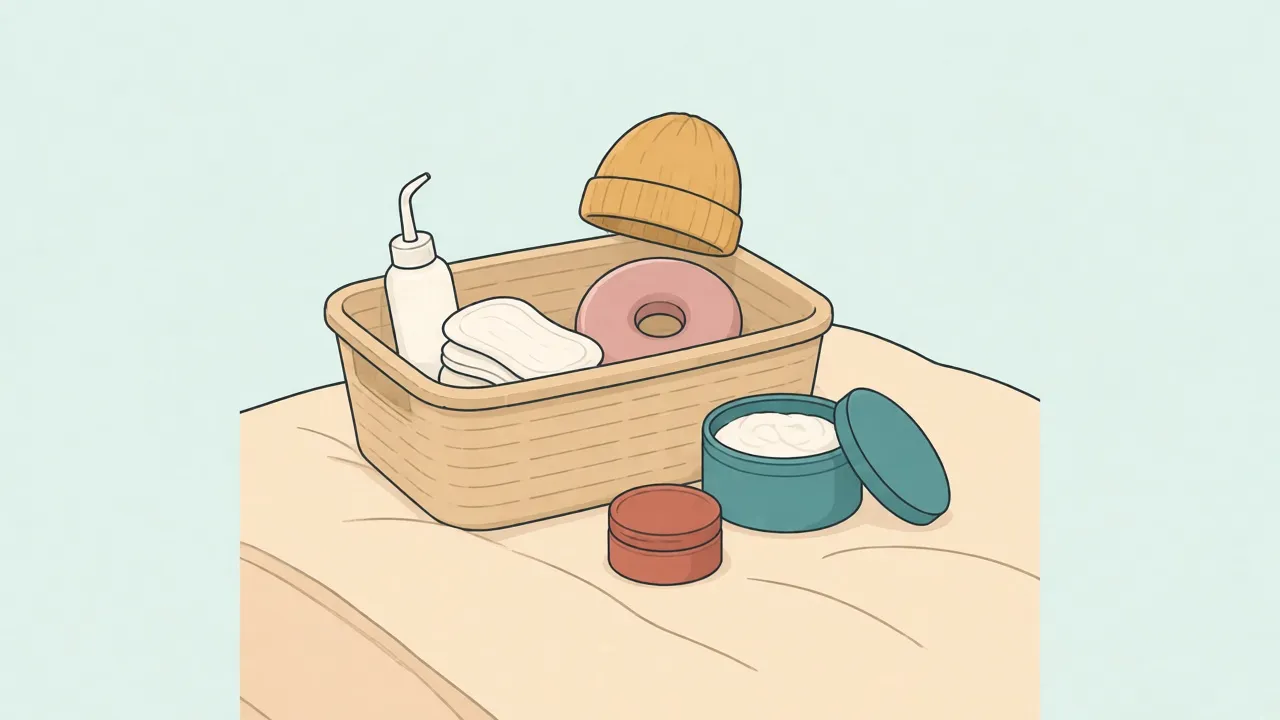
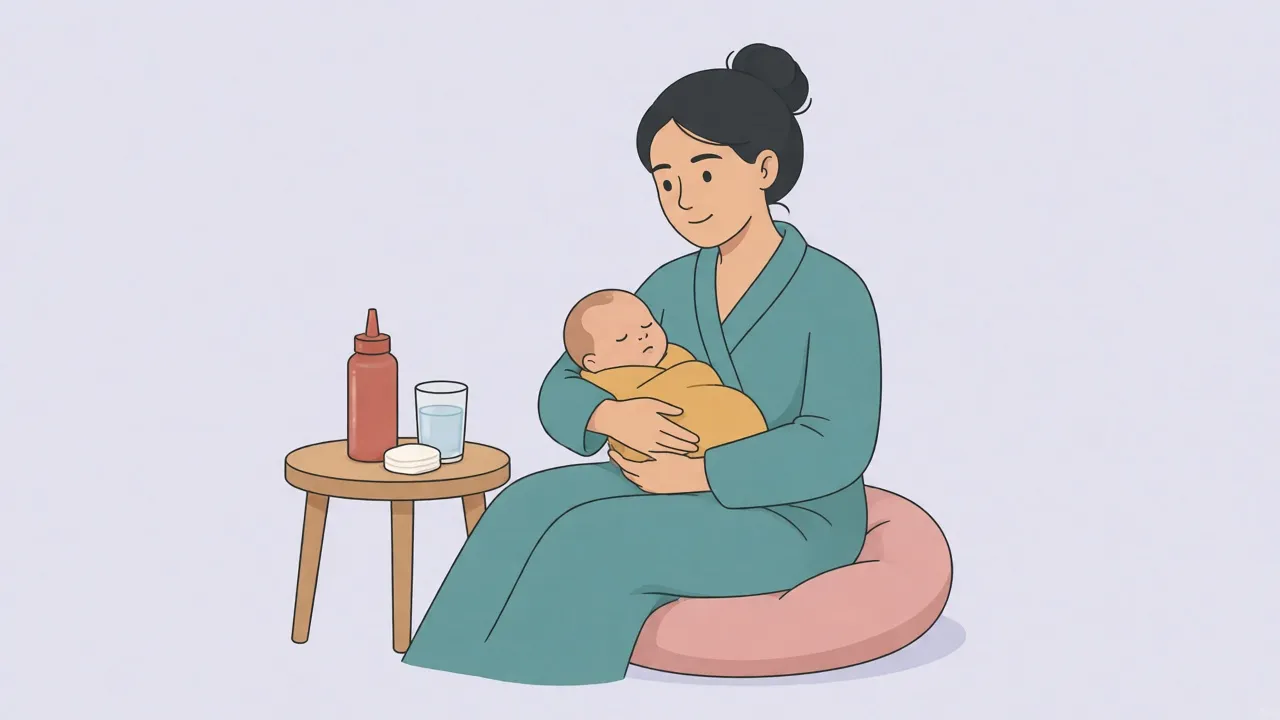
Rinsing beats wiping. Dry paper drags across stitches and swollen skin. A squeeze bottle of warm water, often called a peri bottle, lets you rinse after you pee or poop, then pat dry with a soft cloth. The NHS already tells you to pat dry after washing stitches, and to hold a pad of clean tissue over stitches when you poop so the area feels supported 1. A bottle is that same idea with less rubbing. Angled bottles are easier to aim when you cannot twist. They are grouped with cold pads and basins on the postpartum hemorrhoid products page.
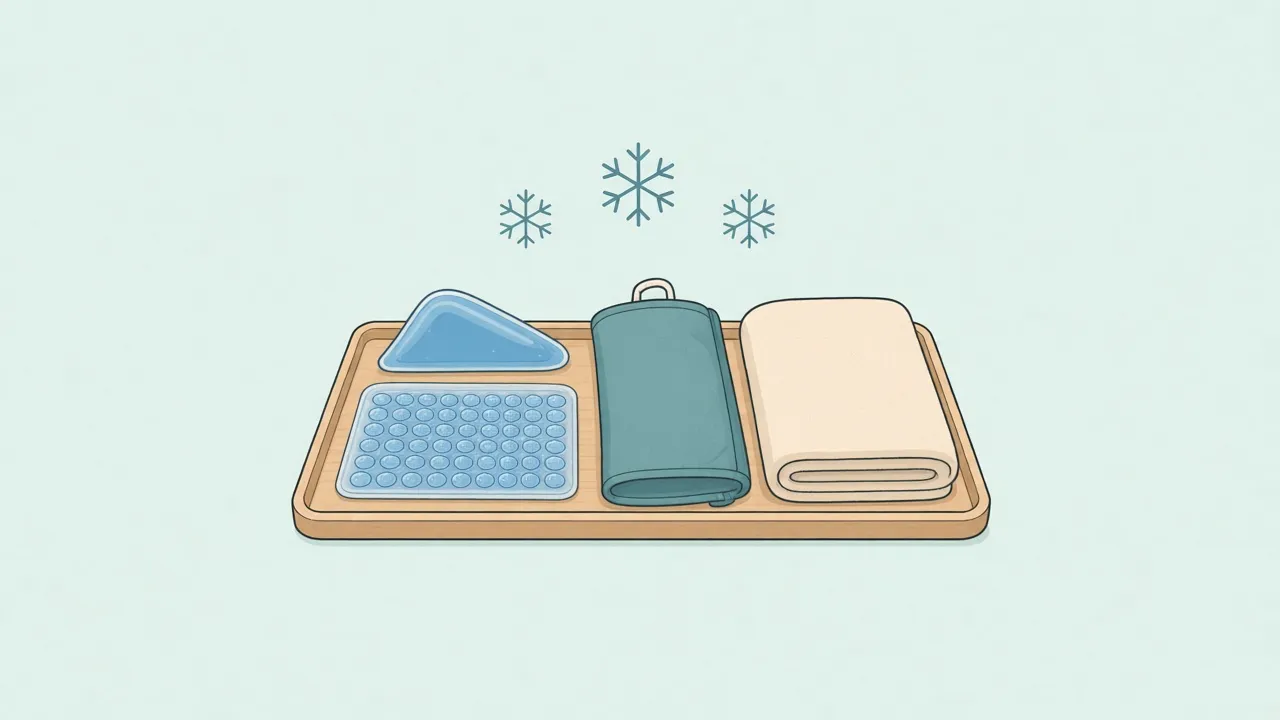
Cold brings swelling down. ACOG lists ice packs for hemorrhoid swelling, and warm sitting baths for symptom relief 6. Wrap the ice in a thin cloth. Hold it on the outside skin for a short spell, then take a break. Numb skin means the cold has been on long enough. Ready-made cold pads, including ones you squeeze to start the cold without a freezer, are compared on the ice pack page. Buyers often use them in the first days, when getting to a freezer is the last thing you want to do.
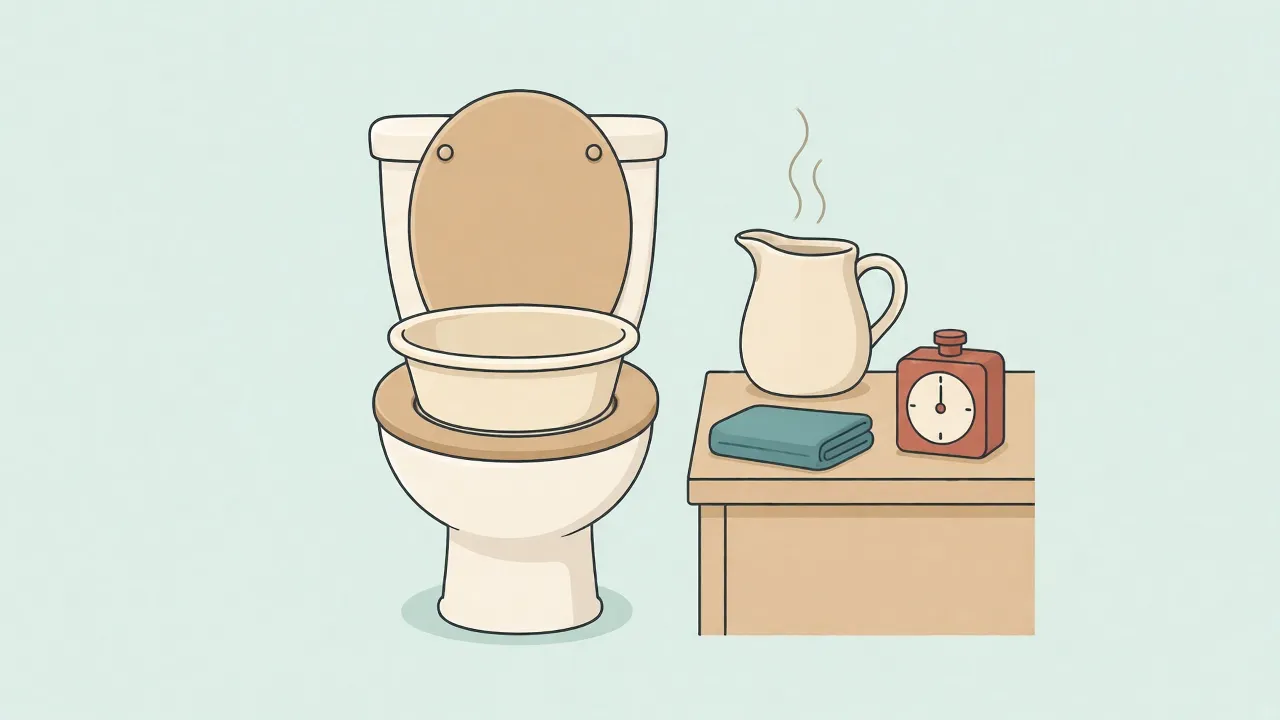
A sitz bath is a few inches of warm water that cover the anus. The NIDDK treatment page suggests sitting in warm water several times a day for pain 7. Plain water is enough. The NHS stitch advice is the same water, used to bathe the area daily 1. Timing, temperature, and what not to add are in how to take a sitz bath. A basin that sits on the toilet is easier than climbing into a tub while you are still sore. Basins are reviewed on the best sitz baths page.
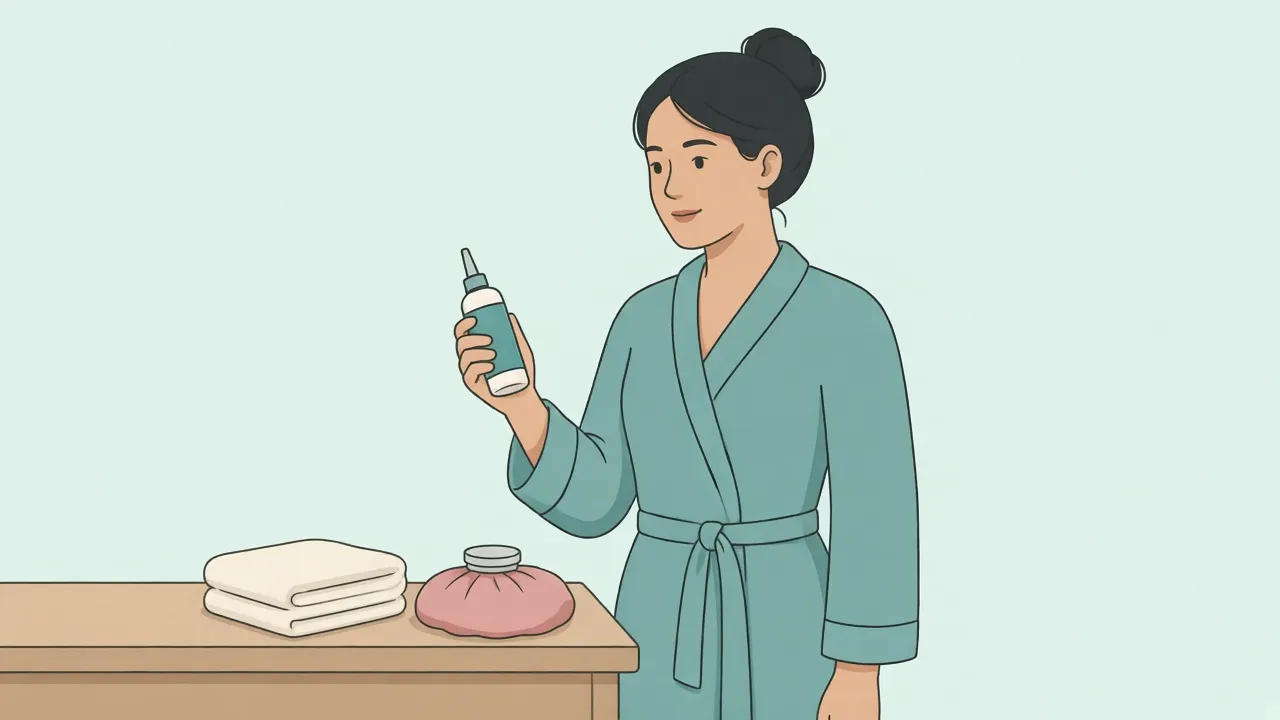
Rinsing instead of wiping, at home or on the go
Most people, especially after childbirth or surgery
The first bowel movement and stool softeners
The NHS is direct about the timing: you probably will not have a poop for a few days after the birth, and you should not let constipation set in 1. Eat fruit, vegetables, salad, whole grains, and wholemeal bread, and drink water. If you have stitches, it is very unlikely you will break them or open the tear. Holding a clean pad of tissue over the stitches as you go can feel steadier. Do not strain 1.
Short toilet sits help too. Go when the urge is there, keep your feet supported if a small stool fits, and get up when you are done. The details are in toilet habits for hemorrhoids.
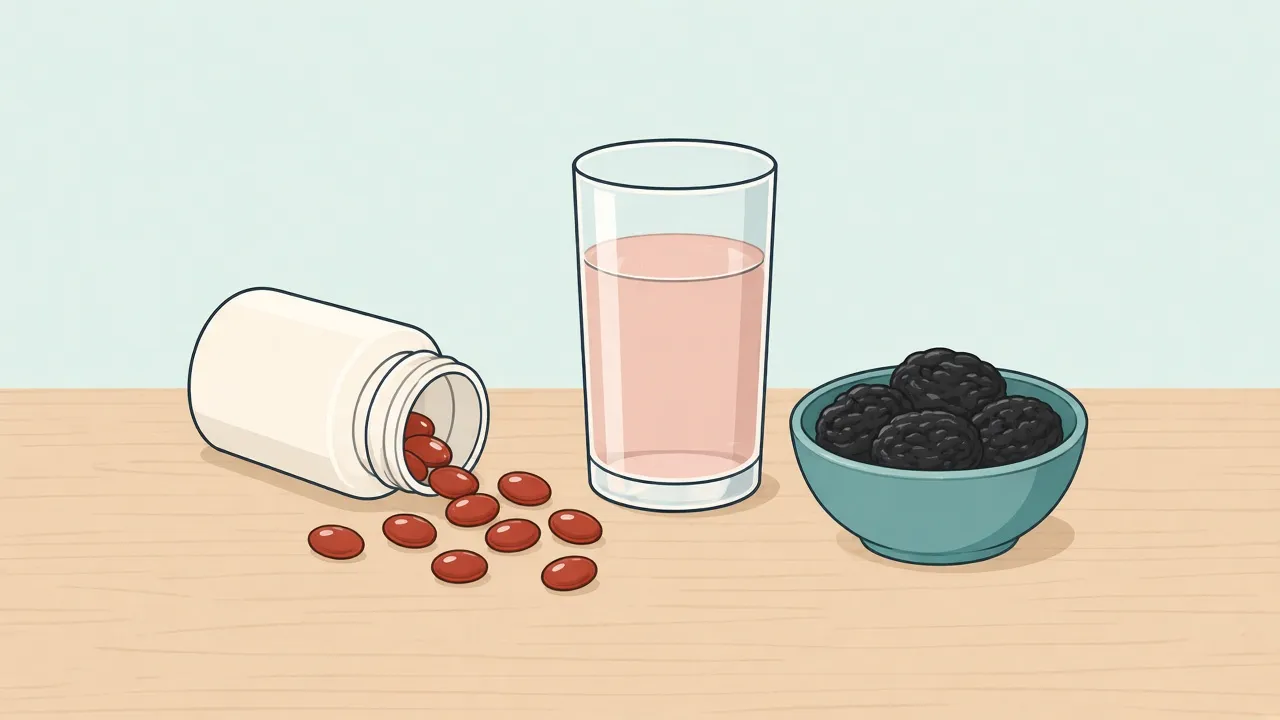
What to take is less settled than the food advice. A Cochrane review of treatments for postpartum constipation found no trials that met its rules, so it could not say which laxative works 10. A companion review on preventing constipation after birth included five trials, most of them decades old and poorly reported 9. For senna, one trial of 471 women suggested more women had a first bowel movement within 24 hours (about 2.9 times as many as on placebo) and also more abdominal cramps (about 4.2 times as many). The reviewers called that evidence low certainty. Evidence that a mother’s laxative changes the baby’s stools was very low certainty, from one older trial of 281 babies, and it did not show a clear harm 9.
Fiber has a cleaner record in adults with hemorrhoids, though not in a postpartum-only trial. A meta-analysis of seven fiber trials found fiber cut the chance of bleeding by about half 12. In a head-to-head trial of 170 people with chronic constipation, psyllium (5.1 grams twice a day) increased the water in the stool more than docusate sodium (100 mg twice a day), and by the second week people on psyllium had 3.5 bowel movements a week versus 2.9 on docusate 11. That is a constipation trial, not a new-mother trial. It is why fiber is the longer-term choice, and why a stool softener is usually a short bridge for the first few days when you are afraid to push. The difference between stool softeners, fiber, and laxatives is spelled out on its own page. If food fiber is not enough, psyllium options are on the fiber supplement page.
What is safe while breastfeeding
Food, water, warm soaks, and wrapped ice do not pass into milk. They are the base of care whether or not you are nursing.
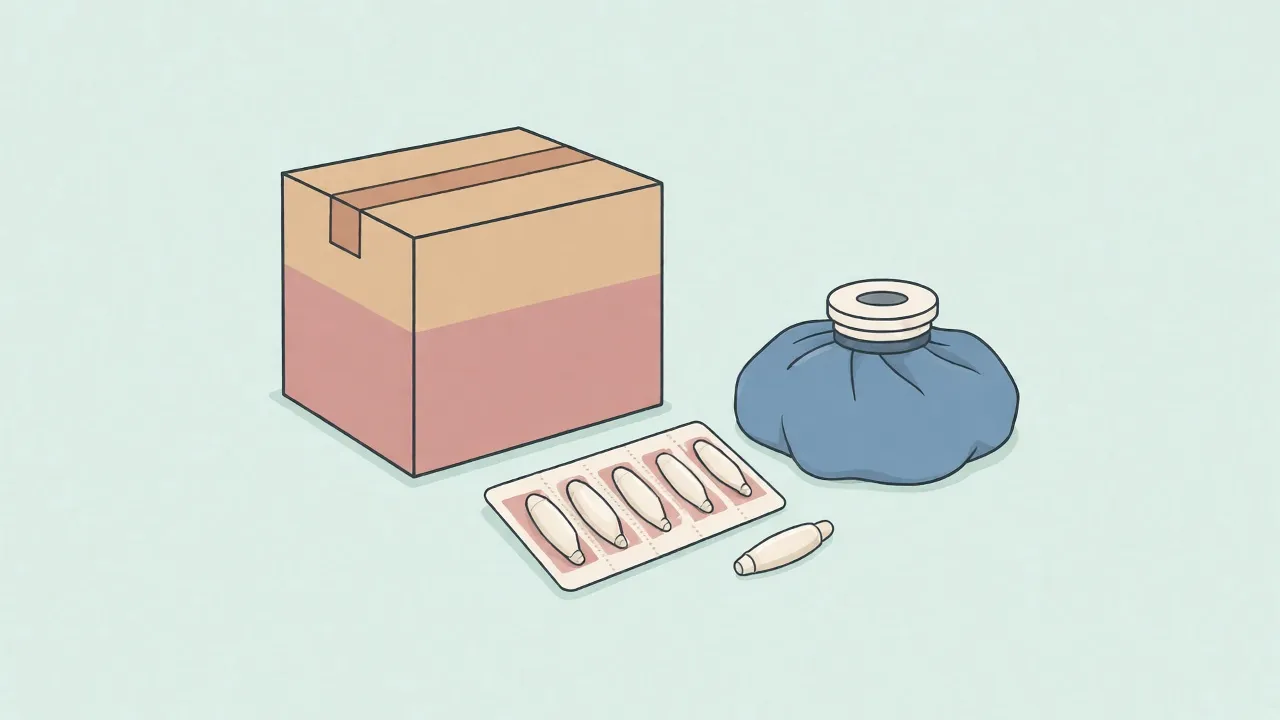
Hydrocortisone treatments for piles are the medicine the NHS has a specific breastfeeding note on. Creams, ointments, sprays, and suppositories can be used while breastfeeding, and the NHS says to keep the course short. It is not known exactly how much reaches milk. The NHS says the amount is likely to be tiny, and that a baby will not absorb much of it. Wash your hands after you use it and before you pick up your baby. Products that also contain a local anesthetic are still considered acceptable while breastfeeding on that page. If the baby feeds less, or is not gaining weight as you expect, talk to a health visitor, midwife, pharmacist, or doctor 8.
Pain tablets are a separate question. The NHS says that if stitches are sore and you are breastfeeding, check with a pharmacist, midwife, or GP before you buy an over-the-counter painkiller 1. Do that even for a tablet you used freely during pregnancy. Doses and which drugs fit with nursing change with the baby’s age.
Stimulant laxatives such as senna are the ones with a (weak) postpartum trial. Cramps were more common, and the baby-stool data are too thin to treat as reassuring proof 9. If you need a laxative, ask which one your midwife prefers rather than picking a strong stimulant off the shelf. A gentle laxative is what the NHS mentions when constipation will not clear with food and water 1.
How long do postpartum hemorrhoids last?
The NHS expectation is a few days or weeks for most people 1. The clot timeline is shorter than that: pain often peaks in the first 48 to 72 hours and is largely settling by day four or five, even though a skin tag can remain after the clot shrinks 13.
The longer view comes from the Australian survey. Of 1,295 women who had a live birth, 1,193 finished follow-up to 24 weeks. Hemorrhoids were among the problems that became less common: the figures given are 30 percent, then 13 percent, between 8 and 24 weeks after birth 3. So a large drop is real, and so is a group who are still bothered well past the first month. Perineal pain in that same list fell from 22 percent to 4 percent, which is a faster fade than hemorrhoids.
There is no good exam study that says every hemorrhoid is gone by week six. The 2014 pregnancy cohort stopped at one month, and 3.3 percent of its new anal problems were first noted at that visit 2. If you are still bleeding or still cannot sit at your postpartum checkup, say so. Home care can continue. A procedure is a later decision, once you are past the first weeks and the symptoms are still running your day.
When to get checked
Phone your midwife, obstetric team, or an urgent clinic for the items below. Ordinary soreness and a little bright red blood on the paper can fit with hemorrhoids. The list is the part that should not wait for a routine checkup.
The NHS also says to tell your midwife about large clots in the vaginal bleeding, and about urine that is very hard to pass, very sore, or smelly 1. Those can be separate from hemorrhoids and still need a same-day call.
If symptoms are still there after about a week of rinsing, soaks, cold, and softer stools, the NIDDK page says to see a clinician rather than keep swapping creams 7. Mention any rectal bleeding you have not had looked at. Hemorrhoids are a common cause of that bleeding, and other conditions can cause it too. The same warning signs for any adult are listed in when to see a doctor for hemorrhoids.

A thrombosed hemorrhoid is a clot under the skin. Why the first 72 hours matter, how pain eases over 1 to 3 weeks, and when to get care.
Frequently asked questions
Can I break my stitches the first time I poop?
The NHS says it is very unlikely you will break stitches or open a tear by having a bowel movement. Holding a pad of clean tissue over the stitches can feel better. Try not to strain. If constipation will not ease, tell your midwife or doctor. A gentle laxative is sometimes the next step.
Can I use a hemorrhoid cream while breastfeeding?
The NHS says hydrocortisone creams, ointments, sprays, and suppositories for piles can be used while breastfeeding, for a short time. Very little is thought to reach the baby. Wash your hands after you apply it and before you pick the baby up. If feeding or weight gain changes, call your midwife, pharmacist, or doctor.
Do people get hemorrhoids after a C-section?
Yes. In one exam study, about 1 in 5 women who developed a problem around the anus had given birth by cesarean. A separate survey found more bowel problems after cesarean than after an unassisted vaginal birth, and less perineal pain. The pregnancy itself, plus constipation afterward, is enough to start symptoms.
Should I use a stool softener or fiber after birth?
Fiber has the stronger evidence for hemorrhoid bleeding in adults, and psyllium softened stools more than docusate in a trial of chronic constipation. That trial was not done in new mothers. Many clinicians still offer a short course of a stool softener for the first bowel movement, because trials in postpartum women are almost missing. Ask your midwife which one they want you on.
Is bleeding from hemorrhoids different from lochia?
Lochia is the bleeding from the uterus that comes from the vagina after birth. Hemorrhoid blood is usually bright red and shows up on the toilet paper or in the bowl when you poop. Heavy vaginal clots are a midwife question. Black stools, dizziness, or bleeding that will not stop need same-day care.
Can I take a sitz bath if I have stitches?
The NHS says to bathe stitches every day in plain warm water and pat dry. A shallow sitz bath is a way to do that without filling a whole tub. Skip soap on the sore skin. Tell your midwife if the area smells unpleasant, becomes much more painful, or you feel feverish.
Sources
- 1. Your body after the birth . NHS , 2024 ; Page last reviewed 25 April 2024 . Government
- 2. Poskus T, Buzinskienė D, Drasutiene G, et al. Haemorrhoids and anal fissures during pregnancy and after childbirth: a prospective cohort study . BJOG , 2014 ; 121(13):1666-1671 . doi:10.1111/1471-0528.12838 Study
- 3. Thompson JF, Roberts CL, Currie M, et al. Prevalence and persistence of health problems after childbirth: associations with parity and method of birth . Birth , 2002 ; 29(2):83-94 . doi:10.1046/j.1523-536x.2002.00167.x Study
- 4. Ferdinande K, Dorreman Y, Roelens K, et al. Anorectal symptoms during pregnancy and postpartum: a prospective cohort study . Colorectal Dis , 2018 ; 20(12):1109-1116 . doi:10.1111/codi.14324 Study
- 5. Sabonyte-Balsaitiene Z, Poskus T, Jasiunas E, et al. Incidence and Risk Factors of Perianal Pathology during Pregnancy and Postpartum Period: A Prospective Cohort Study . J Clin Med , 2024 ; 13(8):2371 . doi:10.3390/jcm13082371 Study
- 6. Problems of the Digestive System (patient FAQ) . American College of Obstetricians and Gynecologists . Guideline
- 7. Treatment of Hemorrhoids . National Institute of Diabetes and Digestive and Kidney Diseases (NIDDK) . Government
- 8. Pregnancy, breastfeeding and fertility while using hydrocortisone for piles and itchy bottom . NHS , 2023 ; Page last reviewed 22 December 2023 . Government
- 9. Turawa EB, Musekiwa A, Rohwer AC Interventions for preventing postpartum constipation . Cochrane Database Syst Rev , 2020 ; 8(8):CD011625 . doi:10.1002/14651858.CD011625.pub3 Cochrane review
- 10. Turawa EB, Musekiwa A, Rohwer AC Interventions for treating postpartum constipation . Cochrane Database Syst Rev , 2014 ; 2014(9):CD010273 . doi:10.1002/14651858.CD010273.pub2 Cochrane review
- 11. McRorie JW, Daggy BP, Morel JG, et al. Psyllium is superior to docusate sodium for treatment of chronic constipation . Aliment Pharmacol Ther , 1998 ; 12(5):491-497 . doi:10.1046/j.1365-2036.1998.00336.x Clinical trial
- 12. Alonso-Coello P, Mills E, Heels-Ansdell D, et al. Fiber for the treatment of hemorrhoids complications: a systematic review and meta-analysis . Am J Gastroenterol , 2006 ; 101(1):181-188 . doi:10.1111/j.1572-0241.2005.00359.x Review
- 13. Hemorrhoids: Expanded Information . American Society of Colon and Rectal Surgeons . Guideline