Quick answer
Rubber band ligation is an office procedure. A doctor places a small rubber band around an internal hemorrhoid so the tissue shrivels and falls off, most often within a week. You stay awake and go home the same day. Mild pain is common. A second visit is sometimes needed. Serious complications are uncommon.
Product links on this page go to Amazon. As an Amazon Associate I earn from qualifying purchases. No brand pays for a place on our lists. How we choose products
Key takeaways
- A doctor places a rubber band at the base of an internal hemorrhoid. The banded part usually shrivels and falls off within a week, and you go home the same day.
- Mild pain is the most common problem. In a large UK trial, the mean pain score was 3.4 the day after banding and 1.6 on day 7.
- Delayed bleeding most often shows up 10 to 14 days later, and the risk is higher if you take aspirin, other anti-inflammatory pain pills, or warfarin.
- In a Montreal series of 805 patients, banding succeeded in 70.5% of people who came back for follow-up. Treating recurrences with another banding raised the cumulative success rate to 80.2%.
- For grade 3 hemorrhoids, surgery clears symptoms more reliably than banding and causes more pain. A 1995 meta-analysis and a 2025 review both start with banding for grades 1 to 3.
On this page
Rubber band ligation, also called banding, is an office treatment for internal hemorrhoids that bleed or slip down. A doctor places a small rubber band around the base of the hemorrhoid. The band cuts off the blood supply. The banded part shrivels and falls off, most often within a week, and scar tissue forms in what is left, which often shrinks the hemorrhoid 1.
Banding is for internal hemorrhoids, and only a doctor should do it. The NIDDK page on hemorrhoid treatment is explicit about that 1. It is a different procedure from the operation that cuts the tissue out.
This page covers the visit itself, pain and bleeding in the first two weeks, complications, how many sessions people need, how often banding works, and how it compares with infrared treatment, injection, artery ligation, and surgery.
What happens before rubber band ligation
Banding is aimed at internal hemorrhoids, the kind above the dentate line, the boundary between the upper and lower anal canal. Internal hemorrhoids can bleed, ache, and prolapse (slip out). External hemorrhoids sit below that line, under the skin. They hurt when they swell or form a clot, and they are a different problem 3. If your lump is a tender clot under the skin, read about external hemorrhoids before you assume banding is the plan.
Doctors grade internal prolapse from 1 to 4. Grade 1 stays inside the anal canal. Grade 2 comes out and goes back on its own. Grade 3 you have to push back. Grade 4 will not go back 3. A 2025 review of hemorrhoidal disease describes office procedures, with rubber band ligation as the first procedure, for grade 1 to grade 3 disease that is still troublesome after fiber, fluids, and less straining. The same review reserves excisional hemorrhoidectomy for grade 3 or 4 prolapse, a clot, or mixed internal and external disease that has not improved with simpler care 3.
What the procedure feels like
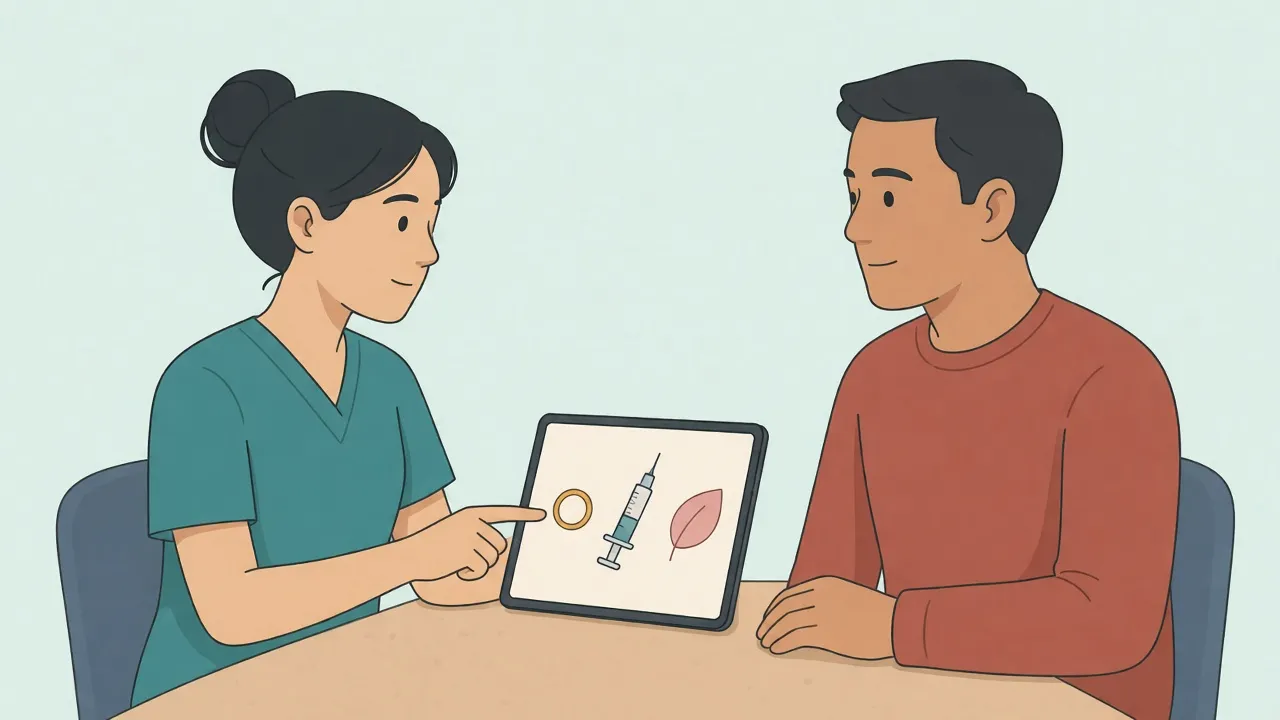
The NHS page on piles describes hospital treatments such as banding this way: you are awake, the area may be numbed, and you go home the same day 2. Clinics place the band in more than one way. A doctor can use an endoscope, looking forward or bent back on itself, or no endoscope at all. The band can be fired with suction or with forceps. One band or several can go on in a single session. A local anesthetic after the band is sometimes used to cut down pain 4.
In a Rome series, two or three hemorrhoids were banded in one session 6. In the Montreal series, the median number of bands placed over the whole course of care was two, with a range from 1 to 17 5.

Pain and bleeding in the first two weeks
Mild pain is the most common complication 4.
A crossover trial of 94 patients compared banding with infrared coagulation, a heat treatment. Pain scores were higher after banding at 30 minutes and at 6 hours. More people used pain pills after banding at 6 hours (29.6% versus 19.2%) and at 24 hours (22.5% versus 13.5%). By one week, pain scores were similar. Bleeding was also more common right after banding: 32.4% versus 4.3% immediately, and 26.8% versus 10.2% at 24 hours. At 72 hours the bleeding rates were no longer clearly different 7.
The HubBLe trial compared banding with hemorrhoidal artery ligation in people with grade 2 or grade 3 hemorrhoids. The day after the procedure, mean pain was 3.4 (standard deviation 2.8) after banding and 4.6 after artery ligation. On day 7 the scores were 1.6 and 3.1. By 21 days and 6 weeks the scores were no longer different 8.
A separate series of 206 people found that 46% had moderate anal pain for 24 hours. Two patients (1%) had severe pain and were admitted for a hemorrhoidectomy within a few days 6.
Numbing medicine helps the first hour more than the next day. In a three-arm trial of 99 patients, 2% lidocaine ointment, with or without diltiazem, lowered pain at 1 hour compared with placebo ointment. The combination group used about 45% less pain medicine in total and in the hospital, and those patients were more satisfied. The authors said the pain relief looked short term 9. A complications review also notes that local anesthetic after ligation is one way clinics try to reduce pain 4. Use only what your own clinic gives you, and follow that label.
Bleeding has two usual windows. Early spotting can happen in the first day, as in the infrared comparison above 7. Later bleeding is different. A review written as a guide to banding complications says secondary bleeding normally occurs 10 to 14 days after banding, when the tissue separates. People on antiplatelet or anticoagulant medicine have a higher risk, and there are reports of massive, life-threatening hemorrhage 4. In the Montreal series, bleeding complicated 2.8% of treatment courses. In the Rome series, 2.4% had rectal bleeding after a week 56.
While the tissue is separating, keep stools soft. In seven hemorrhoid trials, fiber cut the risk of symptoms that did not improve by 47% (relative risk 0.53) and the risk of bleeding by 50% (relative risk 0.50) 15. Products are compared in our guide to fiber supplements, and food sources are in the hemorrhoid diet.
Metamucil Sugar-Free Psyllium Powder, Orange
Best for: Most people starting fiber for hemorrhoids
The best-known psyllium powder and our top fiber pick. Psyllium is the fiber used in most of the hemorrhoid trials.
What recent buyers say
Reviews are strongly positive. It works, it tastes better than people expect, and a tub lasts. Recent buyers say it made them regular within a day or two, and they stress drinking plenty of water with it. The main complaint is the added sweetener and coloring, which some would rather avoid.
What buyers like
- Keeps people regular
- Orange flavor goes down easily
- Big tub is good value
Common complaints
- Some dislike the sweetener and coloring
- Thickens if you do not drink it quickly
Skip it if you prefer plain fiber with nothing added. Anthony's plain psyllium is the unflavored option.
Complications, including the serious ones
A 2016 guide to banding complications sorts them into minor problems, which are more common, and major problems, which are uncommon 4.
Minor problems in that review include mild bleeding, pain, feeling faint, a band that slips off, trouble urinating, an anal fissure (a small tear), and a chronic sore along the canal. Mild pain is the one that shows up most often.
Major problems in the same review include massive bleeding, a thrombosed (clotted) hemorrhoid, severe pain, urinary retention that needs a catheter, pelvic sepsis (a deep infection), and death. The review says seven deaths from infectious complications had been described in published reports, including cases of pelvic sepsis, Fournier’s gangrene, liver abscess, tetanus, and bacterial endocarditis. Those are case reports gathered over many years of a very common procedure, not the usual outcome. The review’s point is that early recognition changes the result 4.
The Montreal series put numbers on a few of these events per treatment course: bleeding 2.8%, thrombosed external hemorrhoids 1.5%, and bacteremia 0.09% 5. In HubBLe, serious adverse events that needed a hospital stay were uncommon after banding. After one patient with a rectal tumor that was already there was set aside, 2 of the remaining serious events were in the banding group (about 1%) and 12 were in the artery-ligation group (about 7%). The banding events were pain in one person and bleeding that did not need a transfusion in another 8.
The screening line is there because hemorrhoids are a common reason for blood, and they are not the only reason. The US Preventive Services Task Force recommends colorectal cancer screening starting at age 45 14. New bleeding still deserves a look if you have not been screened. More on what is typical is in bleeding hemorrhoids, and the signs that should not wait are in when to see a doctor.
How many banding sessions will you need?
There is no single number. It depends on how many hemorrhoids you have and whether the first band is enough.
In the Rome series, two or three hemorrhoids were banded at the first visit, and 20% of patients had a second session after one month 6. In Montreal, the median gap between bandings was 4.7 weeks, with a range from 1.1 to 35.6 weeks. Needing four or more bands was tied to a trend toward more failure and a greater need for hemorrhoidectomy later 5.
HubBLe makes the repeat-visit pattern clear. At one year, 49% of the banding group (87 of 176) and 30% of the artery-ligation group (48 of 161) met the trial’s definition of recurrence. The gap was mostly extra procedures: 32% after banding had another hemorrhoid procedure, compared with 14% after artery ligation 8. A 2025 review puts the same idea in round numbers: symptoms resolve in 89% of patients, and repeated banding is needed in up to 20% 3. Those figures mix older studies with different definitions of success.
The HOLLAND trial allowed up to two banding sessions when it compared banding with hemorrhoidectomy for grade 3 hemorrhoids 13. One visit is common. A second visit a few weeks later is ordinary. A long string of bands is a reason to talk about surgery.

Toilet habits for hemorrhoids: less straining, shorter sits, a footstool, and gentle cleaning, based on the posture studies.
How often banding works, and how often hemorrhoids return
Success depends on the definition and on how long you watch.
The Montreal series is the largest here: 805 patients and 2,114 bands. Of those, 104 never returned and were left out. Among the 701 who were followed, for a median of 1,204 days, success was 70.5% (494 people) and failure was 29.5% (207). Success meant lasting relief, marked improvement with bleeding no more than once a month, or relief for at least 100 days. Rates were similar for every degree they treated. Banding a recurrence worked in 73.6% of first recurrences, 61.4% of second recurrences, and 65% of third recurrences. Counting those repeat treatments, cumulative success was 80.2%. Later recurrences returned sooner 5.
In Rome, at one year, 90% of people with grade 2 hemorrhoids and 75% with grade 3 hemorrhoids had no leftover symptoms. Phone follow-up at 10 and 17 years reached 138 of 206 patients (67%). Of those reached, 69% had no symptoms, 28% still had some, and 3% had needed more surgery 6.
A 1995 meta-analysis recommended banding first for grades 1 to 3, and surgery if banding failed, because hemorrhoidectomy responded better and caused more pain and more complications 10.
How banding compares with other treatments
| Treatment | Pain | How well symptoms settle | What usually happens next |
|---|---|---|---|
| Infrared coagulation | Less pain than banding in the first day 7 | Both did well in a 94-person crossover trial. Patients split 50/50 when they chose the third treatment 7 | More likely than banding to need another treatment, in an older meta-analysis 10 |
| Sclerotherapy (injection) | Banding hurts more 10 | Banding had a better response, including when trials were split by grade 10 | More likely than banding to need further therapy 10 |
| Hemorrhoidal artery ligation | More pain than banding on day 1 and day 7 8 | Fewer recurrences at 1 year (30% versus 49%) 8 | The difference was mostly fewer repeat procedures. Serious hospital events were more common than after banding 8 |
| Excisional hemorrhoidectomy | Clearly more pain 1112 | Better symptom control, especially for grade 3 1113 | Fewer retreatments. More delayed complications. Time off work is longer 1112 |
The Cochrane review of banding versus excisional hemorrhoidectomy found three poor-quality trials. Complete remission favored surgery (relative risk 1.68), and the trials disagreed with each other. For grade 3, two trials and 116 patients still favored surgery (relative risk 1.23). For grade 2, one trial of 32 patients found no clear difference. Fewer people needed another treatment after surgery (relative risk 0.20). Pain was more common after surgery (relative risk 1.94), and so were delayed complications. Satisfaction looked similar. The authors’ split was banding for grade 2, and surgery for grade 3 or for recurrence after banding 11.
A 2021 meta-analysis of eight trials found better symptom control after surgery, less pain after banding, more complications after surgery (bleeding, urinary retention, continence trouble, or narrowing), and equal satisfaction. One study found an earlier return to work after banding. The authors said the trials were too uneven to name a winner for grade 2 or 3 12.
HOLLAND assigned adults with grade 3 hemorrhoids to banding (up to two sessions) or excisional hemorrhoidectomy. Among 79 patients (46 banding, 33 surgery), surgery gained 0.08 quality-adjusted life years and had a recurrence rate 33.5 percentage points lower (95% confidence interval 15.3% to 51.7%). The sample is small 13.

If you and your surgeon choose the operation, read the hemorrhoidectomy recovery timeline before the date. Office treatments and surgery are compared in hemorrhoid procedures and the treatment overview.
After banding, fiber, fluid, and short toilet sits are the habits that keep stool soft. A heavy bleed, a fever, or pain with inability to urinate is a same-day call 414.
Frequently asked questions
Can I work the day I have hemorrhoid banding?
Most people go home the same day and stay awake for the procedure. The area may be numbed. Plan a quiet rest of the day, because pain is often highest in the first 24 hours. If your job is heavy lifting, ask the clinic before you go back.
Does the rubber band stay inside me?
The band and the tissue it traps are meant to fall off. The National Institute of Diabetes and Digestive and Kidney Diseases says this most often happens within a week. You may not notice the band in the toilet. A little bleeding around that time is common.
Can banding be done if I take a blood thinner?
Tell the clinic about aspirin, ibuprofen, warfarin, and any other blood thinner before the visit. Clinic series and a complications review both found more bleeding, including some heavy bleeding, in people on these medicines. Your doctor may change the timing. Do not stop a prescribed blood thinner on your own.
What if banding does not fix the hemorrhoid?
A repeat banding often helps. In one long series, a first recurrence was treated successfully with banding in 73.6% of cases. If you need four or more bands, or you have grade 3 prolapse that keeps coming down, surgery is the usual next step. Satisfaction after surgery and after banding has been similar in reviews, even though surgery hurts more.
Is bleeding a week later an emergency?
A small amount of blood around days 10 to 14 is the usual time for the banded tissue to separate. Heavy bleeding, dizziness, black stools, fever, or pain that keeps you from passing urine is not the usual course. Those need same-day care.
Sources
- 1. Treatment of Hemorrhoids . National Institute of Diabetes and Digestive and Kidney Diseases (NIDDK) . Government
- 2. Piles (haemorrhoids) . NHS , 2026 . Government
- 3. Ashburn JH Hemorrhoidal Disease: A Review. . JAMA , 2025 . doi:10.1001/jama.2025.13083 Review
- 4. Albuquerque A Rubber band ligation of hemorrhoids: A guide for complications . World J Gastrointest Surg , 2016 ; 8(9):614-620 . doi:10.4240/wjgs.v8.i9.614 Review
- 5. Iyer VS, Shrier I, Gordon PH Long-term outcome of rubber band ligation for symptomatic primary and recurrent internal hemorrhoids. . Dis Colon Rectum , 2004 ; 47(8):1364-1370 . doi:10.1007/s10350-004-0591-2 Study
- 6. Forlini A, Manzelli A, Quaresima S, et al. Long-term result after rubber band ligation for haemorrhoids. . Int J Colorectal Dis , 2009 ; 24(9):1007-1010 . doi:10.1007/s00384-009-0698-y Study
- 7. Marques CF, Nahas SC, Nahas CS, et al. Early results of the treatment of internal hemorrhoid disease by infrared coagulation and elastic banding: a prospective randomized cross-over trial . Tech Coloproctol , 2006 ; 10(4):312-317 . doi:10.1007/s10151-006-0299-5 Clinical trial
- 8. Brown SR, Tiernan JP, Watson AJM, et al. Haemorrhoidal artery ligation versus rubber band ligation for the management of symptomatic second-degree and third-degree haemorrhoids (HubBLe): a multicentre, open-label, randomised controlled trial . Lancet , 2016 ; 388(10042):356-364 . doi:10.1016/S0140-6736(16)30584-0 Clinical trial
- 9. Kwok AMF, Smith SR, Zhao J, et al. Topical Lidocaine or Lidocaine/Diltiazem Ointment Following Rubber Band Ligation of Hemorrhoids: A Prospective 3-Armed Randomized Controlled Trial . Dis Colon Rectum , 2023 ; 66(8):1110-1117 . doi:10.1097/DCR.0000000000002774 Clinical trial
- 10. MacRae HM, McLeod RS Comparison of hemorrhoidal treatment modalities. A meta-analysis . Dis Colon Rectum , 1995 ; 38(7):687-694 . doi:10.1007/BF02048023 Review
- 11. Shanmugam V, Thaha MA, Rabindranath KS, et al. Rubber band ligation versus excisional haemorrhoidectomy for haemorrhoids . Cochrane Database Syst Rev , 2005 ; (3):CD005034 . doi:10.1002/14651858.CD005034.pub2 Cochrane review
- 12. Dekker L, Han-Geurts IJM, Rorvik HD, et al. Rubber band ligation versus haemorrhoidectomy for the treatment of grade II-III haemorrhoids: a systematic review and meta-analysis of randomised controlled trials. . Tech Coloproctol , 2021 ; 25(6):663-674 . doi:10.1007/s10151-021-02430-x Review
- 13. van Oostendorp JY, Dekker L, van Dieren S, et al. Cost-Effectiveness of Rubber Band Ligation Versus Hemorrhoidectomy for the Treatment of Grade III Hemorrhoids: Analysis Using Evidence From the HOLLAND Randomized Controlled Trial. . Dis Colon Rectum , 2025 ; 68(9):1100-1111 . doi:10.1097/DCR.0000000000003832 Clinical trial
- 14. US Preventive Services Task Force Screening for Colorectal Cancer: US Preventive Services Task Force Recommendation Statement . JAMA , 2021 ; 325(19):1965-1977 . doi:10.1001/jama.2021.6238 Guideline
- 15. Alonso-Coello P, Mills E, Heels-Ansdell D, et al. Fiber for the treatment of hemorrhoids complications: a systematic review and meta-analysis . Am J Gastroenterol , 2006 ; 101(1):181-188 . doi:10.1111/j.1572-0241.2005.00359.x Review