Quick answer
You should not pop a hemorrhoid. A hemorrhoid is a swollen blood vessel cushion, not a pimple, and a painful lump is usually a blood clot that will not squeeze out. Cutting or squeezing it at home can cause bleeding and infection. If the lump is less than 72 hours old and very painful, a doctor can remove the clot with numbing medicine.
Product links on this page go to Amazon. As an Amazon Associate I earn from qualifying purchases. No brand pays for a place on our lists. How we choose products
Key takeaways
- A hemorrhoid is a cushion of blood vessels, not a pocket of pus, so there is nothing to pop. The hard, painful lump people want to squeeze is usually a clot in an external hemorrhoid.
- Squeezing or cutting the lump at home can cause bleeding and infection, and it does not reliably remove the clot.
- In the first 2 to 3 days, a clinician can numb the area and remove the clot in the office. In a study of 231 people, symptoms settled in about 4 days after removal and about 24 days without it.
- Most clots settle on their own. Pain usually peaks around 48 to 72 hours and eases a lot after 4 or 5 days with cold packs, warm soaks, soft stools and pain relief.
- If a clot bursts by itself, clean gently and use a pad. Bleeding that will not stop, fever or spreading redness needs care the same day.
On this page
No, you should not try to pop a hemorrhoid. It is not a pimple or a blister. A hemorrhoid is a cushion of blood vessels that has swollen, and the hard, painful lump most people want to squeeze is usually a thrombosed hemorrhoid, which means a blood clot has formed inside an external hemorrhoid. A clot is solid, so squeezing will not empty it, and cutting it at home can cause bleeding and infection.
There is a safe version of the same idea. In the first few days, a doctor can numb the area and remove the clot, which brings relief much faster than waiting. This page explains why the lump forms, what goes wrong when people try to drain it at home, what a doctor can do and when, and how to ease the pain if you let it settle on its own.
Why a hemorrhoid will not pop like a pimple
Everyone has hemorrhoidal tissue. It is a normal cushion of blood vessels in the anal canal 1. It only causes trouble when those veins swell and become inflamed, which is what doctors mean by hemorrhoids 12. A pimple or a boil is a pocket of pus under the skin. A hemorrhoid has no pocket of fluid to release.
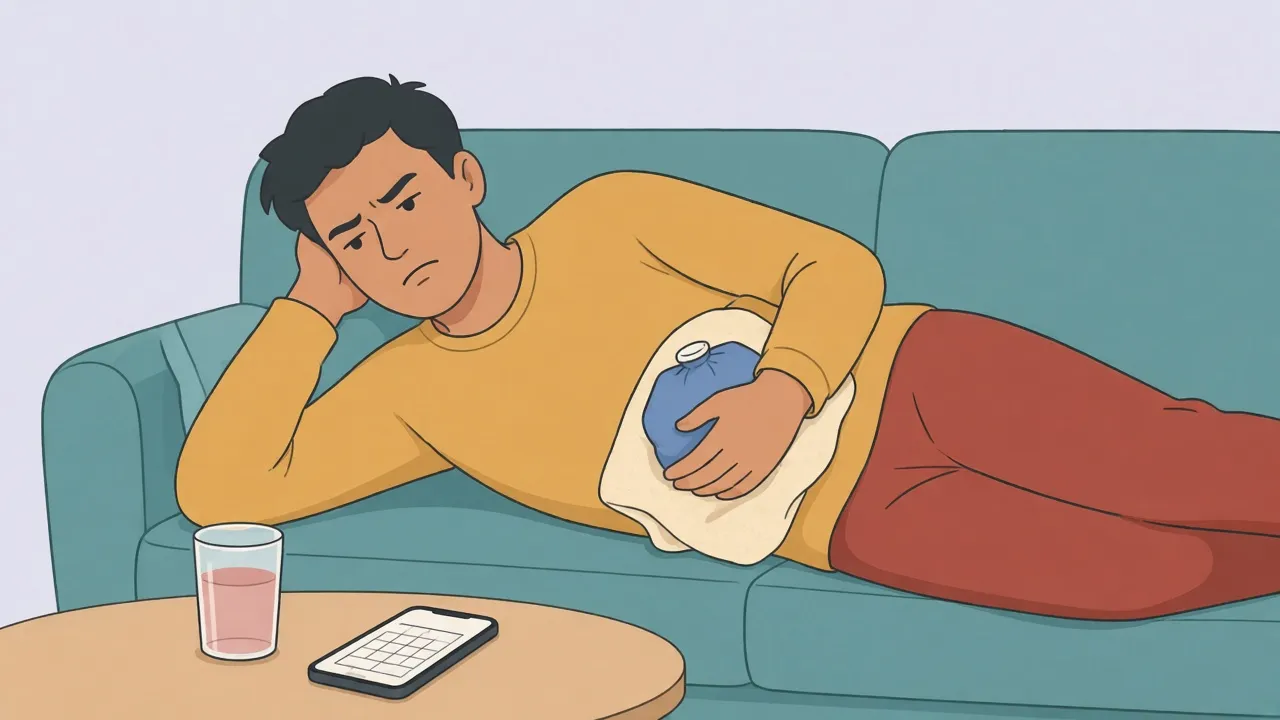
The lump that feels ready to burst is different. When blood pools and clots in an external hemorrhoid, a bluish, firm and very tender lump appears at the edge of the anus, often over a few hours and often after straining 1. The skin there is tight, so the clot raises pressure and causes constant pain. Pain usually peaks around 48 to 72 hours and is largely easing after 4 or 5 days 1.
Because the clot is solid, a pin prick or a squeeze does not drain it. Internal hemorrhoids cannot be popped either. They sit inside, covered by lining rather than skin. If one slips out, it can often be eased back in, which our guide on pushing a prolapsed hemorrhoid back in walks through.
What can go wrong if you try at home
Some people search for ways to lance a hemorrhoid with a needle or a blade. The area around the anus is hard to see, rich in blood vessels and constantly in contact with stool, which carries bacteria. Even a small cut there is hard to keep clean.
Here is what can happen:
- Bleeding. Hemorrhoids are made of blood vessels, and a cut can bleed more than you expect and be hard to stop without help.
- Infection. A home wound can become infected. Even after a sterile procedure done by a surgeon, about 2% of people in a large series later needed treatment for an abscess or fistula 5. A home attempt has none of those safeguards.
- Leftover clot and more pain. Opening the skin without taking out the whole clot can leave part of it behind. A review of hemorrhoid thrombosis says that simple incision and drainage leaves clot behind and leads to more recurrence 3.
- Missing a different problem. An abscess, a fissure or another condition can look like a hemorrhoid. Emergency surgery guidelines note that wrong diagnoses are common with anal problems and that delay leads to worse outcomes 11.
What a doctor can do instead
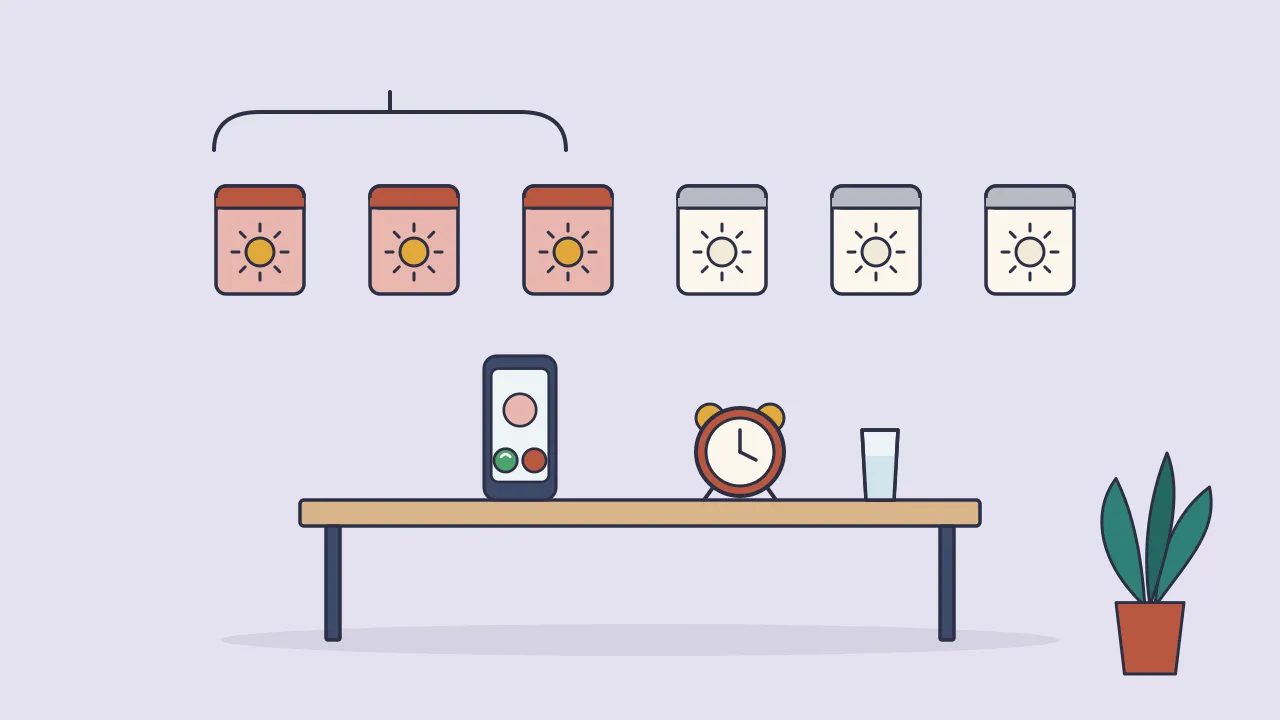
Removal in the first 72 hours
If the lump appeared within the last 2 to 3 days and the pain is severe, a clinician can remove the clot. The area is numbed with an injection, and the clot is taken out through a small cut, usually in the office or emergency department 57. A 2022 review notes that colorectal societies favor non-surgical care first, and that surgery is mainly considered when symptoms started within the last 48 to 72 hours or when home care is not working 7.
The time window exists because the clot starts to settle on its own after about 72 hours. From then on, the procedure may hurt more than the clot that is already easing 3.
What the studies show about removal
In a chart review of 231 people with thrombosed external hemorrhoids, symptoms settled in an average of 3.9 days when the clot was removed and 24 days when it was managed without surgery 2. A new clot was also less common after removal, and when one came back it came later 2. The groups were not randomized, so these numbers are a guide rather than proof.
A recent meta-analysis of surgery versus non-surgical care for thrombosed hemorrhoids pooled six studies with 851 patients 4. Surgery cut the risk of the clot coming back by about half. Bleeding rates were similar between the groups 4.
An office series of 340 people who had the clot cut out under local anesthetic found that 6.5% later needed another procedure for a new clot, and serious complications were uncommon 5. Most people (79%) said they would choose local anesthetic again if they needed a repeat 5.
How the clot is removed is still debated. Some surgeons cut out the whole lump. Others open it and take out the clot, called a thrombectomy. A 2023 study of 96 people found success rates were not clearly different between the two methods, with a trend in favor of the simpler thrombectomy 6. Either way, it is done by a clinician with numbing medicine and sterile tools, which is the part home attempts cannot copy.

A prescription ointment option
For people who prefer to avoid a procedure, there is a prescription option with trial evidence. In a randomized trial of nifedipine ointment, 86% of people using nifedipine plus lidocaine had complete pain relief after 7 days, compared with 50% using lidocaine alone 8. This is a prescription product. Do not try to make it from blood pressure pills.
What to do if you let it settle
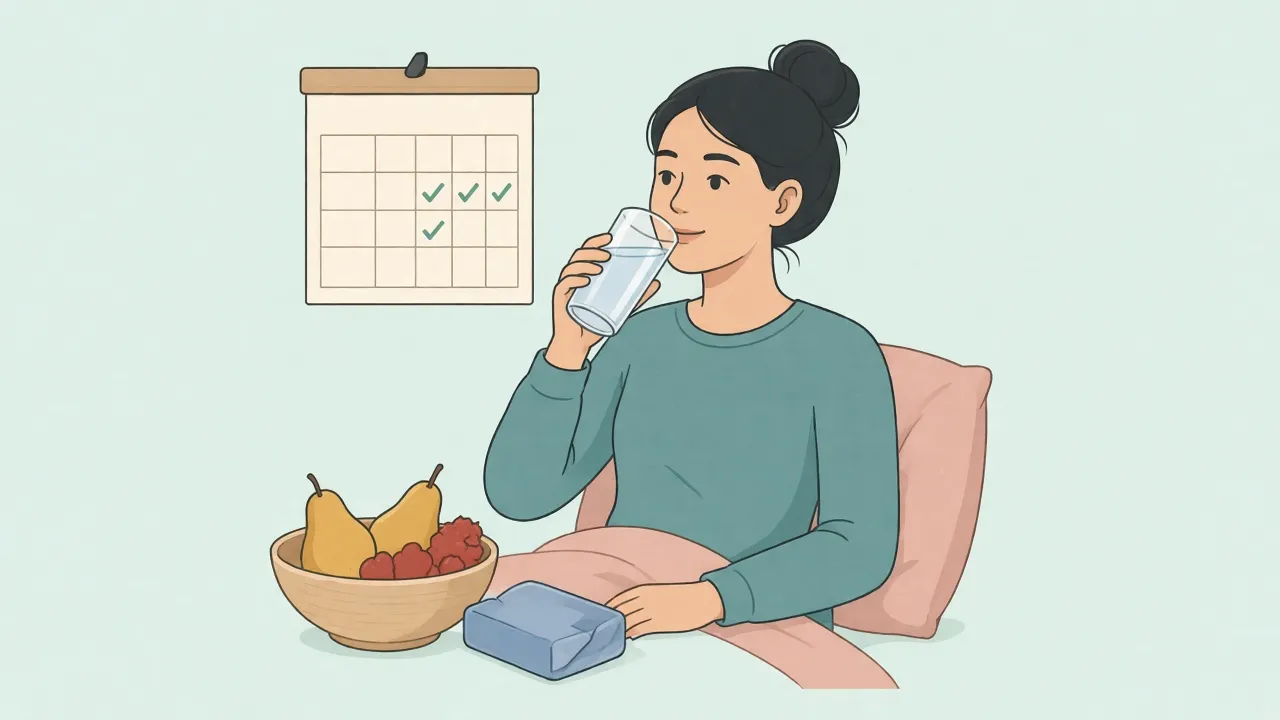
Most clotted hemorrhoids settle without a procedure 17. The aim is to ease the pain and avoid straining while the body absorbs the clot. Our plan for fast hemorrhoid relief covers the first 48 hours in more detail.
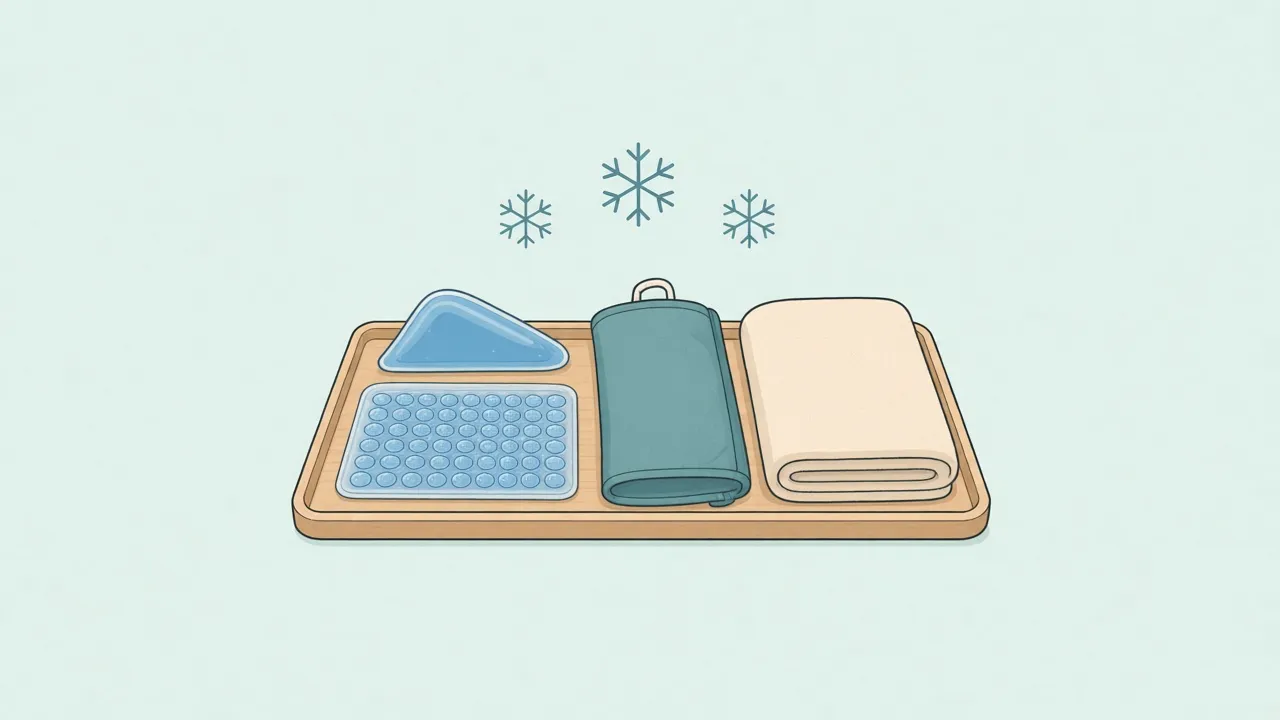
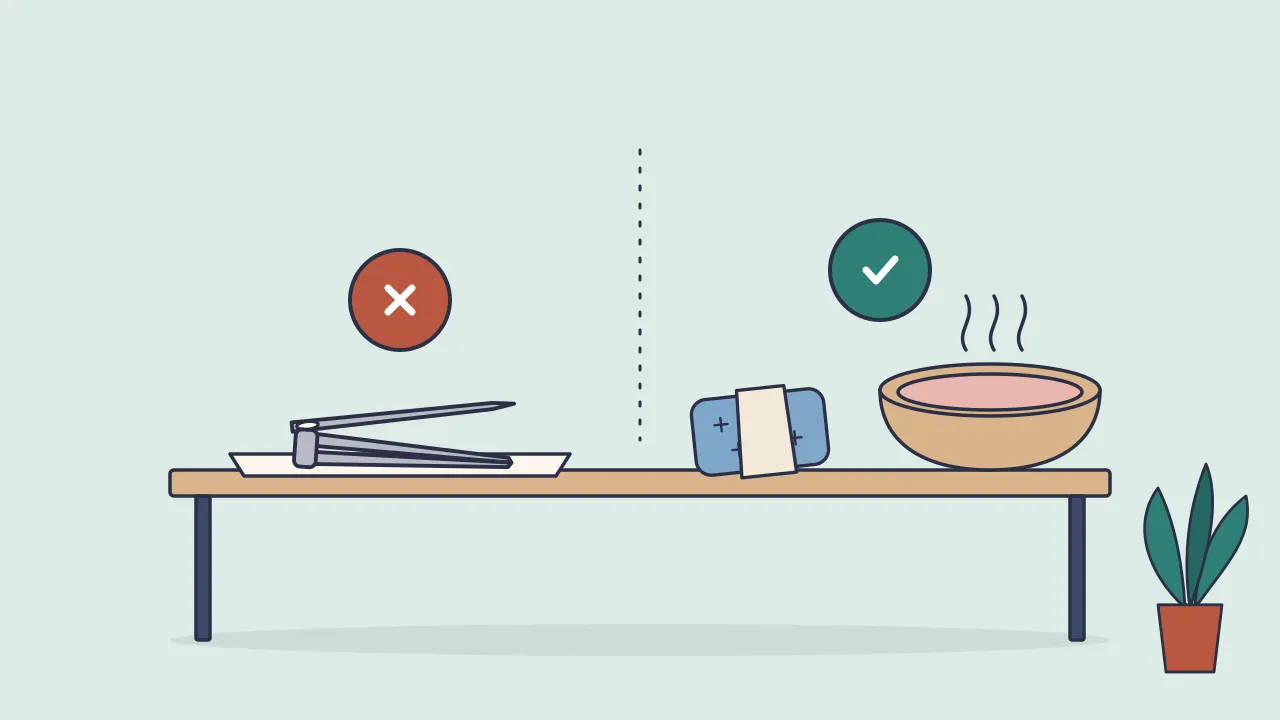
Cold and warmth do different jobs, and you can use both in the same day. The comparison is on ice or heat for hemorrhoids. If you want a pack shaped for this area, our picks of the best ice packs for hemorrhoids compare a small wedge pack and pads, and the best sitz baths page covers basins that fit on the toilet.
Swelling and throbbing when you want relief without medicine
Most people, especially after childbirth or surgery
After the clot is absorbed, a small flap of soft skin can stay behind, called a skin tag. It is painless and is not a new clot. Our guide to external hemorrhoids explains when a skin tag is worth removing.
If it bursts on its own
Sometimes the skin over the clot splits by itself, and dark clotted blood leaks out 1. The pressure drops and the pain often eases quickly.
Clean the area gently with warm water, pat it dry and wear a pad or folded gauze in your underwear. A warm soak can help keep the area clean. Avoid ointments inside the open spot unless a clinician tells you to use one.
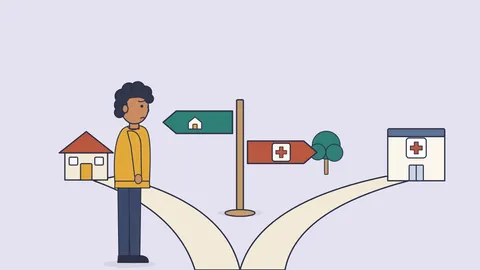
Pain that is getting worse instead of better, or any of the signs above, needs a doctor. Our guide on when to see a doctor for hemorrhoids explains which clinician to call and what happens at the visit.
Frequently asked questions
What happens if a hemorrhoid pops on its own?
The thin skin over a clotted hemorrhoid can split, and dark clotted blood leaks out. The pressure often drops and the pain may ease. Clean the area gently with warm water, pat it dry and wear a pad. Get care the same day if the bleeding does not stop with gentle pressure, or if you get a fever or spreading redness.
Can you pop an internal hemorrhoid?
No. Internal hemorrhoids sit inside the anal canal and are covered by lining, not a blister. If one slips out, it is a cushion of blood vessels that may be eased back in, not something to drain. Our guide to pushing a prolapsed hemorrhoid back in explains how to do that safely.
Can I use a sterilized needle to drain a hemorrhoid?
No. A clot is solid, so a needle hole will not drain it, and the area is full of bacteria from stool. You risk bleeding, infection and a wound that is hard to keep clean. A clinician uses numbing medicine, sterile tools and a proper cut to remove the clot.
Does it hurt to have a clotted hemorrhoid removed?
The area is numbed with an injection first, which stings for a short time. Most people feel pressure rather than sharp pain during the procedure. There is soreness for a few days afterward, but in studies relief came much faster than waiting for the clot to settle on its own.
Is it a hemorrhoid or a boil?
A clotted hemorrhoid is usually bluish, firm and very tender and appears over hours, often after straining. An anal abscess is a pocket of pus that tends to cause throbbing pain, warmth, redness and sometimes fever, and it does need draining by a clinician. Because they can look alike, see a doctor rather than trying to drain either one.
Sources
- 1. Hemorrhoids: Expanded Information . American Society of Colon and Rectal Surgeons . Guideline
- 2. Greenspon J, Williams SB, Young HA, Orkin BA Thrombosed external hemorrhoids: outcome after conservative or surgical management . Dis Colon Rectum , 2004 ; 47(9):1493-1498 . doi:10.1007/s10350-004-0607-y Study
- 3. Sun Z, Migaly J Review of Hemorrhoid Disease: Presentation and Management . Clin Colon Rectal Surg , 2016 ; 29(1):22-29 . doi:10.1055/s-0035-1568144 Review
- 4. Martins MAB, Almeida LFC, Cappellaro AP, et al. Operative versus nonoperative treatment of thrombosed external hemorrhoids: a systematic review and meta-analysis. . Updates Surg , 2026 ; 78(1):169-175 . doi:10.1007/s13304-025-02302-1 Review
- 5. Jongen J, Bach S, Stübinger SH, et al. Excision of thrombosed external hemorrhoid under local anesthesia: a retrospective evaluation of 340 patients. . Dis Colon Rectum , 2003 ; 46(9):1226-31 . doi:10.1007/s10350-004-6719-6 Study
- 6. Yalcinkaya A, Yalcinkaya A, Atici SD, et al. Local excision versus thrombectomy in thrombosed external hemorrhoids: a multicenter, prospective, observational study. . BMC Surg , 2023 ; 23(1):228 . doi:10.1186/s12893-023-02105-4 Study
- 7. Picciariello A, Rinaldi M, Grossi U, et al. Management and Treatment of External Hemorrhoidal Thrombosis. . Front Surg , 2022 ; 9:898850 . doi:10.3389/fsurg.2022.898850 Review
- 8. Perrotti P, Antropoli C, Molino D, et al. Conservative treatment of acute thrombosed external hemorrhoids with topical nifedipine . Dis Colon Rectum , 2001 ; 44(3):405-409 . doi:10.1007/BF02234741 Clinical trial
- 9. Piles (haemorrhoids) . NHS , 2026 . Government
- 10. Treatment of Hemorrhoids . National Institute of Diabetes and Digestive and Kidney Diseases (NIDDK) . Government
- 11. Tarasconi A, Perrone G, Davies J, et al. Anorectal emergencies: WSES-AAST guidelines. . World J Emerg Surg , 2021 ; 16(1):48 . doi:10.1186/s13017-021-00384-x Guideline
- 12. Definition & Facts of Hemorrhoids . National Institute of Diabetes and Digestive and Kidney Diseases (NIDDK) . Government